
Modena, in the heart of Emilia-Romagna, is the undisputed birthplace of balsamic vinegar – a product so tied to this land that its methods, grape varieties, and aging rules are protected by European law. For more than a decade, we at Emilia Delizia have guided travellers inside the traditional acetaie, explaining the differences between supermarket balsamic, IGP balsamic, and the precious DOP Tradizionale aged for decades in wooden attics. This guide brings together that first-hand experience with everything you need to know before tasting or buying authentic balsamic vinegar in Modena.
Why Balsamic Vinegar from Modena Is Unique
Balsamic vinegar of Modena is protected by two certifications:
DOP – Denominazione di Origine Protetta: the highest, most regulated category, reserved for Aceto Balsamico Tradizionale di Modena.
IGP – Indicazione Geografica Protetta: a wider category with more accessible vinegars for everyday use.
Although both come from the same territory, they represent entirely different traditions, ageing times, textures, and flavours. Here, it is our guide about balsamic vinegar tasting in Modena so you can get a bettere understanding of the product yourself.
Aceto Balsamico Tradizionale di Modena DOP
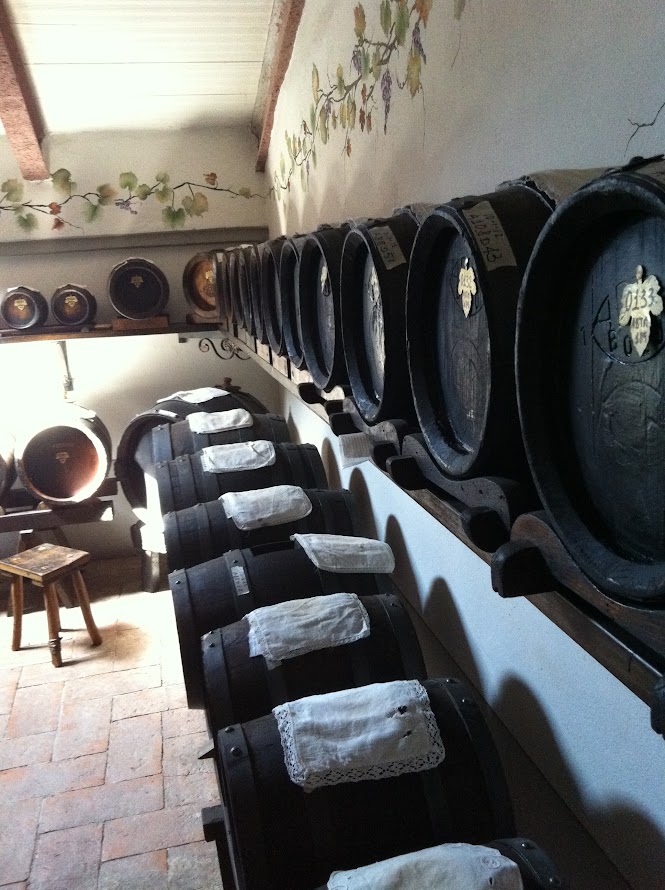
Aceto Balsamico Tradizionale is Modena’s most prized gastronomic product. It is made exclusively from cooked grape must and aged for a minimum of 12 years in a sequence of wooden barrels known as a batteria. Each barrel is smaller than the previous one, concentrating the liquid over time and developing deep aromas and flavours.
The product is bottled only in a distinctive 100 ml bulb-shaped bottle designed by Giugiaro. No other bottle shape is legally allowed for DOP balsamic vinegar.
DOP Tradizionale is divided into two categories:
Affinato (12 years): Balanced and versatile, with a bright acidity and a lightly syrupy texture. Ideal for finishing meat, risotto, Parmigiano Reggiano, or simply tasting on a spoon.
Extra Vecchio (25 years): Long, elegant, and velvety. Notes of wood, dried fruit, and cooked must. Used in drops rather than spoonfuls, and often enjoyed on Parmigiano, gelato, or strawberries. This version comes with a gold cap.
Aceto Balsamico di Modena IGP
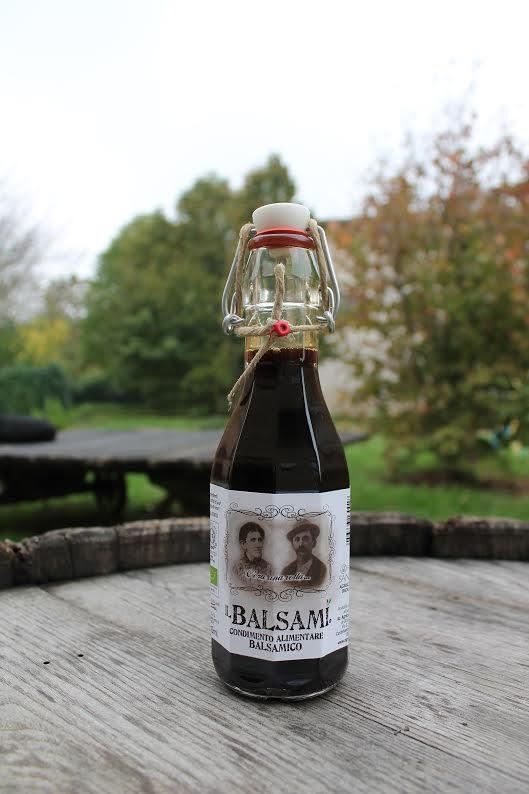
Balsamic vinegar with the IGP label is more flexible in its production rules and far more common. It is made from grape must mixed with wine vinegar and may contain caramel for colour. The minimum ageing time is 60 days, though higher-quality IGP products may be aged for several years.
IGP balsamic vinegar is lighter, sharper, and more acidic than DOP, making it perfect for salads, marinades, roasted vegetables, and everyday cooking.
DOP vs IGP: Key Differences
| Feature | DOP Tradizionale | IGP Balsamico |
| Ingredients | 100% cooked grape must | Must + wine vinegar |
| Additives | None | Caramel allowed |
| Aging | 12 to 25+ years | 60 days to a few years |
| Texture | Dense and syrupy | Lighter and fluid |
| Bottle | Mandatory 100 ml bulb | Any bottle shape |
| Price | €50–€180+ per 100 ml | €3–€20 per bottle |
| Best Use | Finishing and tasting | Cooking and dressings |
How to Choose Authentic Balsamic Vinegar (2025 Checklist)
With so many products on the market, it’s easy to feel overwhelmed. Here is a quick checklist we always share with our guests:
See where the food actually comes from.
The Emilia Delizia food tour takes you inside working Parmigiano, balsamic, and ham producers — rated 4.9 stars on TripAdvisor.
- Look for the official DOP or IGP seal. If the seal is missing, avoid it.
- DOP Tradizionale always comes in the bulb bottle. Any other bottle shape is not DOP.
- Check ingredients: DOP = cooked grape must only. IGP = must + wine vinegar. Avoid caramel or thickeners.
- Be wary of low prices. Real aged balsamic cannot cost €5.
- Only DOP can legally state “12 years” or “25 years.” IGP uses ageing terms for marketing, not certification.
How to Taste Balsamic Vinegar Like a Local
During our tastings, we guide guests through a simple but revealing three-step method:
- Warm a drop on the spoon. The aroma develops with heat.
- Smell before tasting. Real balsamic never smells harsh or alcoholic.
- Taste slowly. Look for balance, roundness, and a long finish. If it burns your throat, it’s not high quality.
The Best Acetaie to Visit in Modena (2025 Selection)
These acetaie represent the best mix of history, quality, and visitor experience. We regularly include some of them in our visits and consider them excellent introductions to Modena’s balsamic tradition:
- Gran Deposito Aceto Balsamico Giuseppe Giusti – The oldest producer, with an impressive museum and guided tastings.
- Acetaia Malpighi – Family-run, deeply rooted in Modenese tradition.
- Acetaia Manicardi – Beautiful countryside setting near Castelvetro.
- Acetaia La Bonissima – A boutique producer with exceptional attention to detail.
- Acetaia Cazzola e Fiorini – Over a century of family production.
- Acetaia Fini – One of Modena’s most recognisable names.
Each offers guided tastings, insights into the aging process, and the chance to buy directly from the producer.
Visit an Acetaia.
If you’re curious to see how this works in practice, consider joining a balsamic vinegar tour from Bologna, where you can visit a traditional acetaia, learn how the vinegar ages for decades in wooden barrels, and taste different vintages. If you are planning a broader visit to the city, you may also want to explore our guide to things to do in Modena, which brings together the most interesting food, cultural, and automotive experiences in the area.
FAQ – Balsamic Vinegar of Modena
Why is balsamic vinegar of Modena so expensive?
Because it is made only from cooked grape must and aged naturally for decades in wooden barrels. Over time, up to 90% of the liquid evaporates, leaving a dense, highly concentrated product. Each bottle represents years of work, slow ageing, and strict quality inspections.
We also have a guide about how and where to buy traditional balsamic vinegar in Modena, check it out if are visitng the city soon.
Does balsamic vinegar expire?
DOP Traditional Balsamic Vinegar does not expire. Thanks to its natural acidity and decades of ageing, it remains stable indefinitely. Store it in a cool, dark place away from heat and direct sunlight.
Can I bring balsamic vinegar on a plane?
Yes. Bottles under 100 ml (such as the DOP Giugiaro bottle) may be carried in hand luggage. Anything larger must be placed in checked luggage due to liquid restrictions.
Which grapes are used?
The main varieties are Lambrusco, Trebbiano, Ancellotta, and other grapes traditionally grown in Modena. Each grape contributes different aromas and sugar levels essential for long ageing.
Do I need to book a tasting?
Most acetaie require reservations to control visitor flow and protect the delicate ageing rooms. A guided visit ensures access, expert explanations, and proper tastings of aged products.
How do I recognise real DOP Balsamic Vinegar?
Authentic Aceto Balsamico Tradizionale di Modena DOP is always bottled in the official 100 ml bulb-shaped bottle designed by Giorgetto Giugiaro. Introduced in 1988 to protect Modena’s heritage, this bottle shape is legally protected and cannot be used by any non-DOP product. Its purpose was to create a visually unique, instantly recognisable signature for the city’s most prestigious vinegar.
- Exclusive design: a rounded bulb base, elegant shoulders, and a short neck – impossible to confuse with IGP balsamic.
- Always 100 ml: fixed by law to avoid misleading packaging sizes.
- Numbered DOP seal: each bottle is individually certified by the Consortium.
- Cap colours: white for 12-year Affinato, gold for 25-year Extra Vecchio.
The bottle was deliberately created to resemble a jewel or perfume flask, signalling that Traditional Balsamic Vinegar is a rare, artisanal luxury – not an everyday condiment. If the bottle is not the Giugiaro bulb design, it is not DOP Traditional Balsamic.
Discover more from Emilia Delizia
Subscribe to get the latest posts sent to your email.