Anthony Bourdain described Emilia-Romagna as a place where “everything you think you know about Italian food gets recalibrated.” He wasn’t wrong. The region had been on his radar long before he filmed there — his 1999 New Yorker essay “Don’t Eat Before Reading This”, the piece that launched his career as a food writer, references the kind of ingredient-driven, producer-obsessed cooking that Emilia-Romagna embodies better than anywhere in Italy. When he finally came to film, the result was one of the most food-dense episodes in the run of No Reservations.
The Episode: No Reservations, Emilia-Romagna (2012)
Bourdain filmed his Emilia-Romagna episode in 2012 for Season 8 of No Reservations. His guide was Michael White, a Wisconsin-born chef who had trained at Ristorante San Domenico in Imola and gone on to build a New York restaurant group around the cooking of northern Italy. The two of them drove the region in a cherry-red Ferrari — an image that captured something true about Emilia-Romagna, a place where world-class food production and automotive engineering exist in the same small towns, often within walking distance of each other.
The episode covered a lot of ground: Bologna’s Quadrilatero market, Ristorante San Domenico in Imola, culatello production at Antica Corte Pallavicina in the Parma lowlands, traditional balsamic vinegar at Acetaia Pedroni in Nonantola and Osteria di Rubbiara near Modena, a meal among the vines at Tre Monti vineyard, and a stay at Hotel Monte del Re in Dozza. It remains one of the most complete portraits of the region ever filmed for television.
Bologna: The Quadrilatero and Tigelle with Mortadella
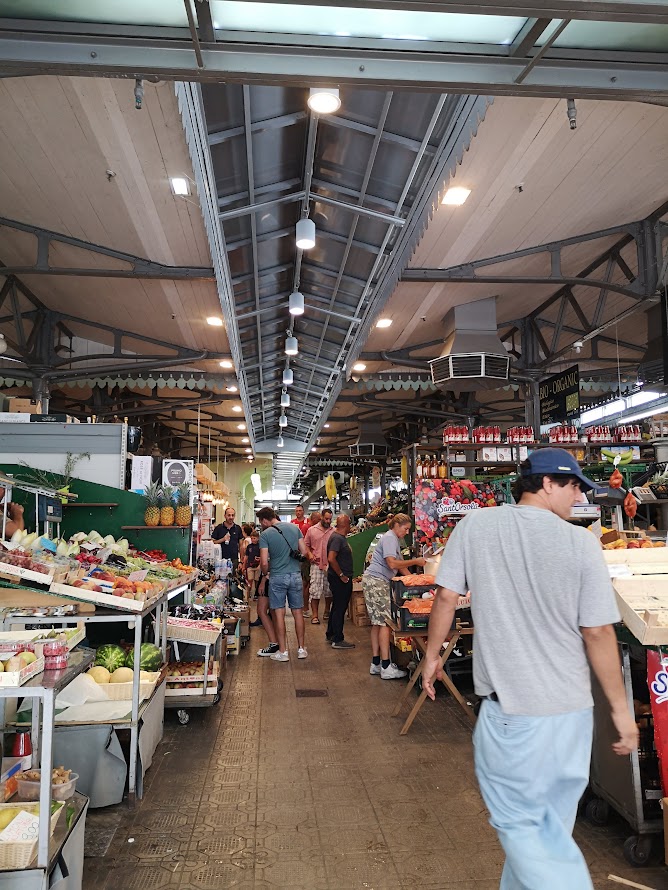
Bourdain spent relatively little screen time in Bologna proper — the episode ranges widely across the region — but what he filmed there was well chosen. His stop was Il Calice on Via Clavature, a bar in the Quadrilatero, Bologna’s ancient market grid where the butchers, cheesemakers, and salumieri have traded since the medieval period. He and Michael White drank Negronis and ate tigelle — small round flatbreads from the Apennine foothills, split and filled with mortadella.
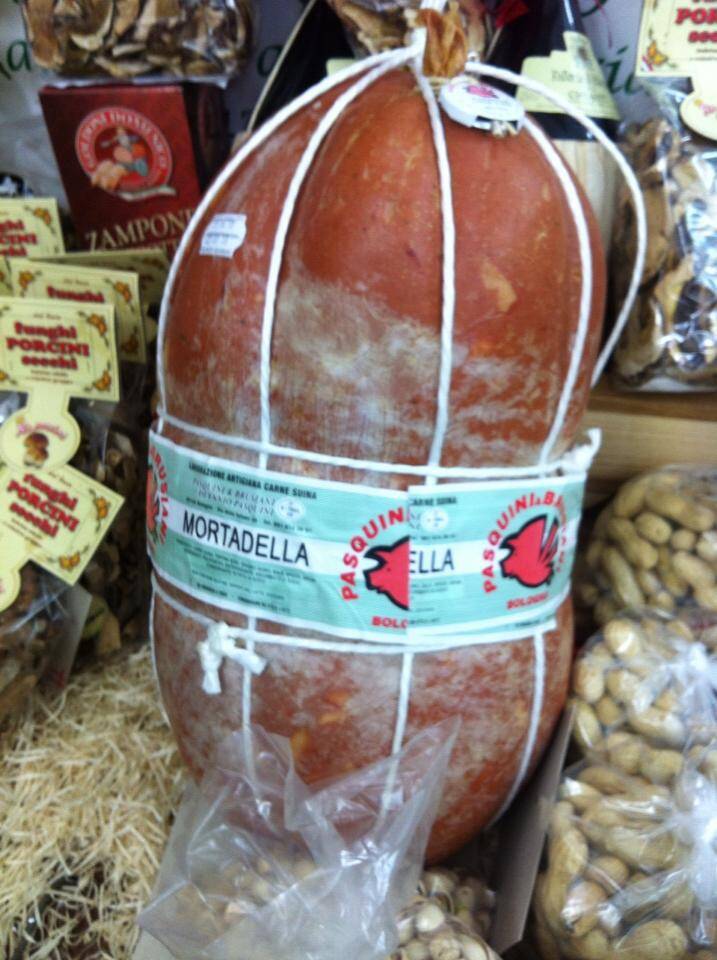
The scene is relaxed and unremarkable in the best possible way — two people eating well in a city that has been eating well for a thousand years. The Quadrilatero remains one of the best places in Italy to spend a morning. The Mercato delle Erbe nearby is an equally compelling option for those who want to eat standing up among locals rather than tourists.
Ristorante San Domenico, Imola: The Meal That Set the Standard
The episode opens and closes at Ristorante San Domenico in Imola, a two-Michelin-starred restaurant that opened in 1970 and has been one of the reference points for refined Emilian cooking ever since. Michael White trained here under Valentino Marcattilii, and Bourdain treated the return visit as a kind of homecoming for his guide. The signature dish featured was uovo in raviolo — a single egg yolk sealed inside a pasta parcel, served with truffle and butter — a dish that has become something of a pilgrimage item for food travellers visiting the region. San Domenico is located in Imola, around 35 kilometres southeast of Bologna, and is reachable by train in under 30 minutes.
Antica Corte Pallavicina: Culatello in the Parma Lowlands
One of the episode’s most memorable sequences was filmed at Antica Corte Pallavicina in Polesine Parmense, a medieval estate on the banks of the Po river that is now the home of the Spigaroli family and their celebrated culatello production. Culatello di Zibello is the most prestigious cured meat in Emilia-Romagna — a boneless, pear-shaped salumi made only from the hind leg muscle of pigs raised on the Po plain, aged in the natural fog and humidity of the river lowlands for a minimum of ten months, often much longer.
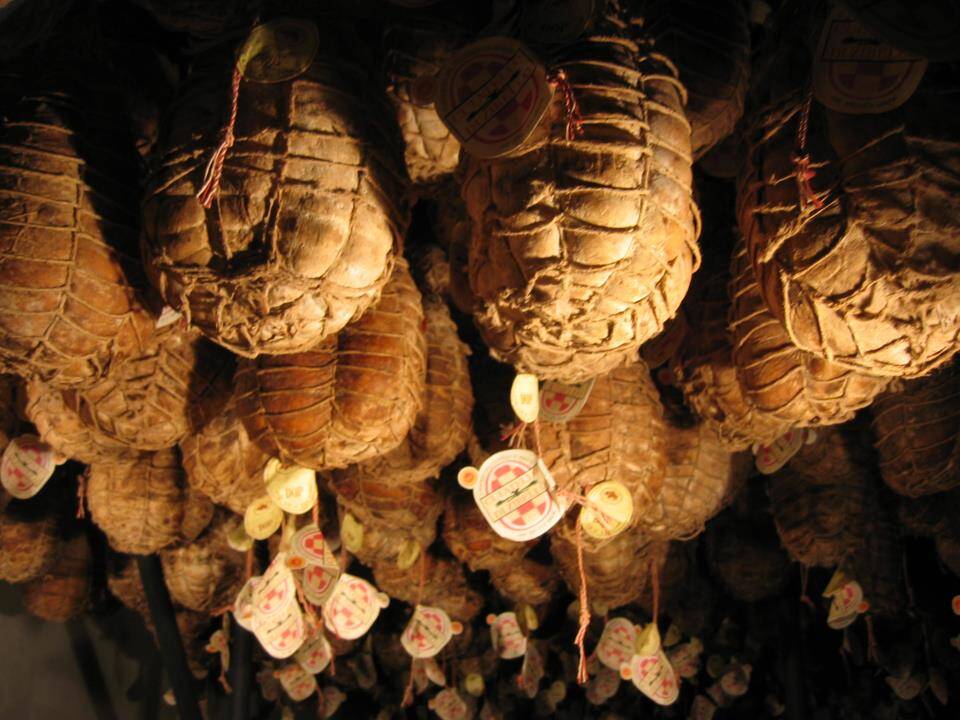
Bourdain was invited to hang his own culatello in the cellar, in company that included cures belonging to Alain Ducasse and Prince Albert of Monaco. The detail says something about the status of this producer and the seriousness with which the region takes its food heritage. He then sat down to eat the cured meat with wine and fresh focaccia. The combination — cold sliced culatello, good bread, a glass of Fortana or Lambrusco — is one of the great simple pleasures of northern Italy.
Looking for an authentic food experience?
Join our
Foodie’s Delight Tour – Parmigiano Reggiano, balsamic vinegar & cured meats in one unforgettable day.
Balsamic Vinegar: Acetaia Pedroni and Osteria di Rubbiara
The episode devoted serious time to traditional balsamic vinegar, visiting two of the most respected producers in the Modena area. Acetaia Pedroni in Nonantola is a family acetaia where production follows the traditional method: cooked grape must, aged in a sequence of progressively smaller barrels made from different woods — oak, cherry, chestnut, mulberry, juniper — over a minimum of twelve years for the Tradizionale designation, and up to twenty-five years or more for the Extra Vecchio. Bourdain arrived, appropriately, in the red Ferrari.
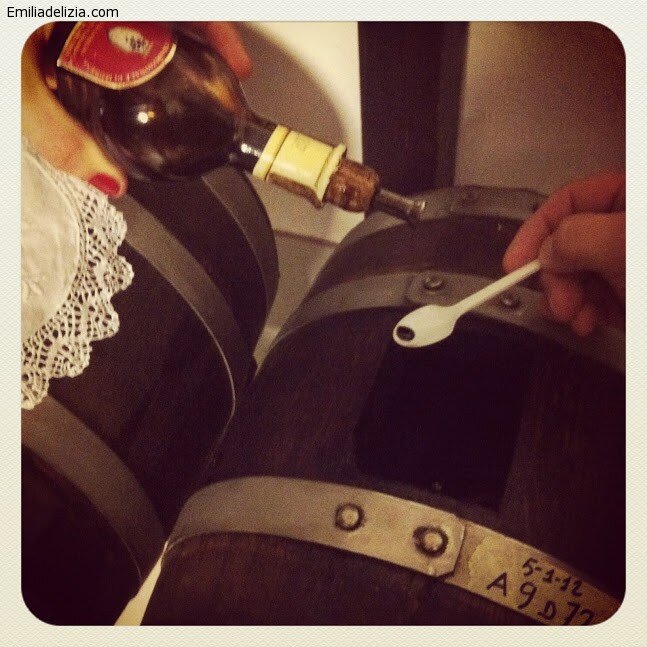
Osteria di Rubbiara, in the village of Rubbiara near Nonantola, added a further dimension. This is a restaurant with no written menu, no reservations by phone, and a policy of serving whatever Italo Pedroni — chef, proprietor, and balsamic producer — has decided to cook that day. Balsamic vinegar appears throughout the meal, including, famously, on ice cream. The place operates on its own terms and has done so for decades. It is exactly the kind of establishment Bourdain sought out everywhere he travelled. A balsamic vinegar tour from Bologna is the most structured way to visit producers of this kind and understand what separates traditional aceto balsamico from the industrial product sold in supermarkets worldwide.
Tre Monti Vineyard: The Meal in the Vines
The episode’s most quoted moment came at Tre Monti vineyard in Imola, where Bourdain and Michael White sat down to a lunch of hand-rolled tagliatelle and Sangiovese among the vines. Bourdain looked at the table, the wine, the landscape, and said: “We all work for this sort of a dream… This is what every sensible person wants.” It is the kind of line that lands because it is plainly true. A table in a vineyard, good pasta, a glass of local wine — this is the version of Italy that people travel a long way to find.
What Bourdain Got Right About Emilia-Romagna
The episode works because Bourdain understood that Emilia-Romagna is not a region that performs for visitors. The producers he visited — the balsamic makers, the culatello curers, the cheesemakers, the winemakers — are doing what their families have done for generations, and the quality is a byproduct of that continuity rather than a marketing decision. He had the credibility to be trusted with access to people who do not typically open their doors to television cameras, and the episode reflects that.
His observation that this is “the best place in the world to eat” — a claim he made in various forms across multiple interviews — was not hyperbole. Emilia-Romagna produces Parmigiano Reggiano, Prosciutto di Parma, culatello, mortadella, traditional balsamic vinegar, fresh pasta, Lambrusco, and Sangiovese. No other region of comparable size produces so many protected-designation food products at the level of quality this one does. Bologna, sitting at the centre of it all, is the logical base for anyone who wants to eat their way through it.
How to Follow Bourdain’s Route Today
Most of the places Bourdain visited are still operating and still excellent. Ristorante San Domenico requires advance booking and is a splurge by any standard, but the uovo in raviolo is worth it. Antica Corte Pallavicina combines a restaurant, hotel, and cellar tours — an overnight stay in the Parma lowlands is one of the more unusual experiences available in northern Italy. Acetaia Pedroni visits need to be arranged in advance. Osteria di Rubbiara requires persistence to book but rewards it.
For those who want the experience organised rather than assembled from scratch, a guided balsamic vinegar and food producer tour from Bologna covers the acetaia visits and market stops with the context that makes the difference between seeing something and understanding it. Bologna’s food markets — the Quadrilatero and the Mercato delle Erbe — require no planning beyond showing up hungry before noon. The rest of Emilia-Romagna is best approached with a car and a list of producers willing to receive visitors. The reward, as Bourdain put it, is exactly what every sensible person wants.
Discover more from Emilia Delizia
Subscribe to get the latest posts sent to your email.