A practical and cultural guide to understanding, tasting, and visiting Culatello producers in Italy.
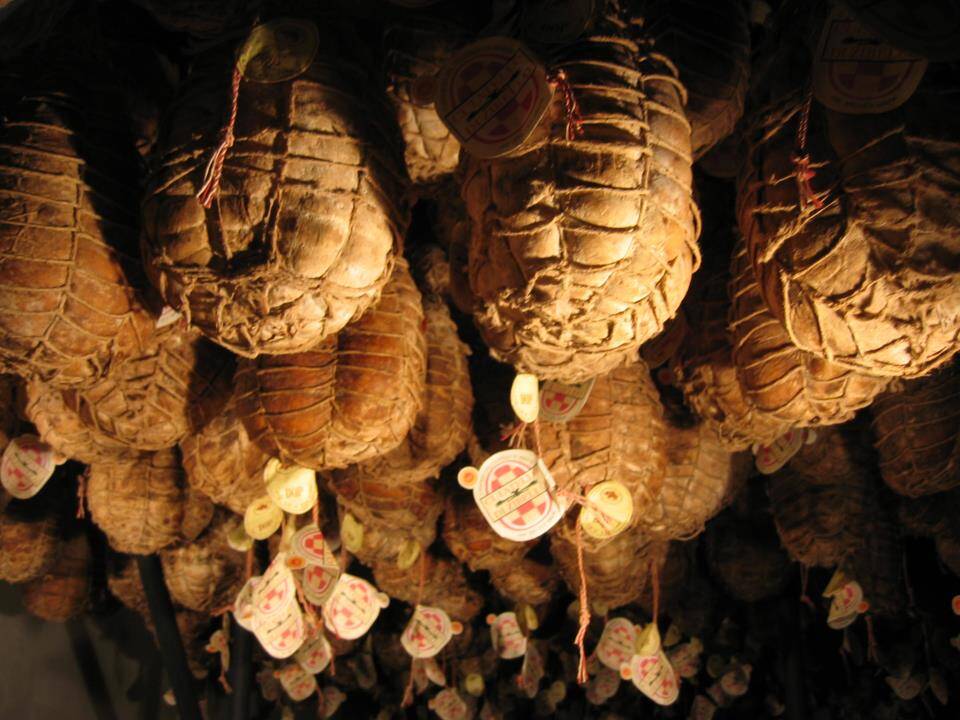
Culatello di Zibello is one of Italy’s most prized cured meats and is often considered the most refined expression of the Emilia-Romagna charcuterie tradition. Produced from the finest part of the pig’s hind leg, it represents a completely different philosophy from the more widely known Prosciutto di Parma.
Understanding Culatello means understanding its land, its climate, and the artisanal methods that have remained largely unchanged for generations.
If you are planning a food-focused visit to the area, this guide fits naturally within a broader itinerary — see our main hub here: How to Plan Your Trip to Parma.
Culatello and Its Area of Production
Culatello is produced in a very small, highly controlled PDO area in the northern part of the Parma province, within the Po Valley (Pianura Padana). The flatlands stretching between the Alps and the Apennines create a unique microclimate characterised by dense winter fog and high humidity.
The officially recognised towns of production are Busseto, Polesine Parmense, Zibello, Soragna, Roccabianca, San Secondo, Sissa, and Colorno. This limited geography is one of the reasons Culatello remains a rare and highly sought-after product.
Unlike Prosciutto di Parma, curing a whole ham on the bone in this humid environment would be impossible. For this reason, the bone is removed, creating two cuts: the prized culatello itself and the smaller fiocchetto. The ingredients are minimal — fresh pork, salt, and pepper — with no additives or preservatives.
How Culatello Is Cured: Traditional Brick Cellars
Culatello is aged in natural brick cellars, typically located in the basements of historic buildings. After seasoning, the meat is placed inside a pig bladder, tied by hand, and left to mature in carefully controlled natural conditions.
Speed is critical: the meat must reach the producer quickly after slaughter to keep bacterial load low, allowing the curing process to rely entirely on time, humidity, and craftsmanship.
The ageing process lasts at least 12 months. Before release, each culatello is inspected by experts from the Consorzio del Culatello di Zibello, who tap the ham with a wooden mallet to identify imperfections — a method passed down through generations.
Parma Ham vs Culatello di Zibello
Is one better than the other? Rather than competitors, Prosciutto di Parma and Culatello should be seen as two distinct expressions of cured meat culture.
Parma ham is sweet, delicate, and produced on a larger scale under strict consortium rules. Culatello, by contrast, remains a niche, labour-intensive product made by a small number of producers using techniques that often date back to their grandparents or great-grandparents.
Culatello has a drier texture, more savoury depth, and a longer, evolving finish. It is more structured and aromatic, with flavours that continue to develop as you chew.
See where the food actually comes from.
The Emilia Delizia food tour takes you inside working Parmigiano, balsamic, and ham producers — rated 4.9 stars on TripAdvisor.
The Final Product: How to Prepare Culatello
Once fully aged, Culatello di Zibello can cost up to €70 per kilogram. The meat appears bright red with fine marbling that enhances its complex flavour.
Preparation is part of the ritual. The string is removed and the ham is soaked in wine for several hours to soften and remove the bladder casing. Once cleaned, it must be sliced extremely thin — ideally using a professional slicing machine.
How to Eat Culatello di Zibello
Culatello is best enjoyed simply, as an appetiser. It pairs beautifully with local wines such as Fortana del Taro, Malvasia dei Colli di Parma, or Lambrusco.
It can also be served with shavings of Parmigiano Reggiano and a few drops of traditional balsamic vinegar from Modena or Reggio Emilia.
How to Visit Culatello Producers in Parma
Visiting a Culatello producer offers rare insight into one of Italy’s most exclusive food traditions. These producers are typically located in small villages along the Po River and are not easily accessible without local knowledge.
Emilia Delizia can organise English-guided visits to Culatello producers from Parma as part of its gourmet experiences. Tours include detailed explanations of production methods and generous tastings.
These visits can also be combined with other local experiences such as Parmesan cheese dairies, wine tastings, balsamic vinegar producers, and cooking classes.
Learn more about gourmet tours from Parma
Culatello Making Classes in Parma
For travellers interested in a hands-on experience, Culatello curing classes offer the opportunity to learn directly from master curers. Participants are guided through preparation, seasoning, tying, and traditional techniques.
The cured product is aged in the producer’s cellars and can be shipped once ready.
Culatello Tastings and Cycling Along the Po River
The Po River area is ideal for combining food experiences with slow travel. Cycling routes connect many Culatello producers and villages, and can be paired with river boat segments.
Some itineraries link Parma to Cremona, offering a broader cultural and gastronomic journey through northern Italy.
Explore cycling and cultural routes from Parma to Cremona
Discover more from Emilia Delizia
Subscribe to get the latest posts sent to your email.