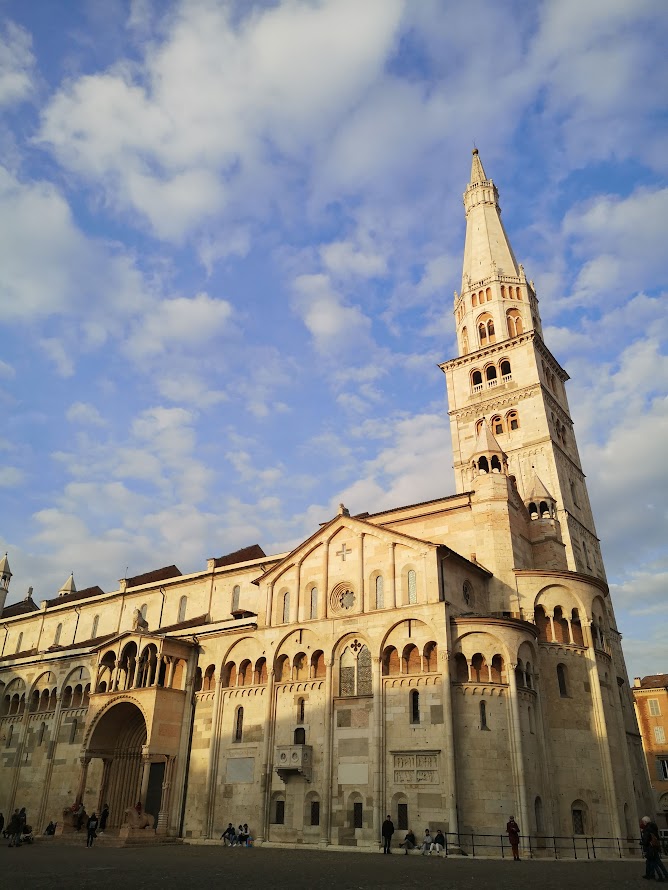
In the heart of Modena, just a few steps from bustling markets and charming trattorie, stands one of Italy’s most important Romanesque monuments: the Duomo di Modena. Also known as the Cathedral of Modena, this UNESCO World Heritage Site is not only a place of worship but a masterpiece of medieval architecture and sculpture. For anyone visiting Emilia-Romagna, especially lovers of history, architecture, or Italian culture, the Duomo is an essential stop.
A Testament to Faith and Craftsmanship
Construction of the Duomo began in 1099, during a time of growing urban prosperity and spiritual renewal in Northern Italy. It was built to house the relics of San Geminiano, Modena’s patron saint, whose presence is believed to protect the city. The project was entrusted to Lanfranco, a visionary architect, and Wiligelmo, a master sculptor whose work on the cathedral façade would become a landmark in the history of European sculpture.
The cathedral was consecrated in 1184, but construction continued for several decades, adding chapels, bell towers, and embellishments. The resulting structure is a harmonious blend of Romanesque clarity, Gothic additions, and Lombard craftsmanship, all fused into a building that still dominates Modena’s cityscape.
Exterior: A Stone Bible in Sculpture
Approaching the Duomo from Piazza Grande, visitors are struck by the purity of its stone façade and the expressive sculptures that cover it. Wiligelmo’s relief panels on the west front tell the story of Genesis with an almost modern emotional intensity. These carvings — including scenes of Adam and Eve, Noah’s Ark, and the Fall — are among the earliest and most important examples of medieval narrative sculpture in Europe.
Flanking the cathedral is the Ghirlandina Tower, Modena’s iconic bell tower. At 86 meters tall, it is visible from across the city and was once used as both a watchtower and symbol of Modena’s independence. The tower leans slightly, adding to its charm, and can be climbed for panoramic views of the city and the Apennines beyond.
Interior: Spiritual and Sculptural Riches
Inside the Duomo, the atmosphere is solemn and serene, with a soaring nave supported by massive columns and semi-circular arches. The play of light and shadow highlights the simplicity of the Romanesque style, drawing attention to the craftsmanship rather than excessive ornamentation.
Beneath the altar lies the crypt of San Geminiano, where his relics are kept in a beautifully sculpted sarcophagus. The crypt itself is surrounded by 30 small columns, each with unique capitals — a true gallery of Romanesque carving.
Another highlight is the pulpit, attributed to the 13th-century artist Enrico da Campione. Its sculpted panels show scenes from the New Testament and reflect a later Gothic sensibility, adding another artistic layer to the church.
Piazza Grande and the Episcopal Complex
The Duomo is part of a wider UNESCO-listed ensemble that includes Piazza Grande and the Palazzo dell’Arcivescovado (Archbishop’s Palace). The square was the heart of civic and religious life in medieval Modena and continues to host events, festivals, and markets today.
Directly next to the Duomo is the Museo Lapidario, which houses sculptural fragments, tombstones, and architectural elements from the cathedral’s long history. It’s a fascinating visit for those who want a deeper dive into Modena’s Romanesque heritage.
Why Visit the Duomo with Emilia Delizia?
At Emilia Delizia, we believe that food and culture go hand in hand. While Modena is famous for its Parmigiano Reggiano, balsamic vinegar, and prosciutto, no visit is complete without exploring the city’s historical core — and the Duomo is the crown jewel. Do not forget to check our foodie’s delight tour in Modena.
Our walking food tours in Modena often begin or end in the Piazza Grande, allowing you to admire the Duomo while sampling local delicacies nearby. With one of our expert local guides, you’ll uncover the hidden meanings behind the sculptures, the political significance of the Ghirlandina, and stories of Modena’s medieval rise.
Practical Information for Visitors
- Location: Piazza Grande, Modena
- Opening hours: Typically 7:00 AM – 12:30 PM, 3:30 PM – 7:00 PM (times may vary)
- Admission: Free for the cathedral, small fee for the tower and museums
- Dress code: Modest clothing is recommended as it is an active place of worship
A Journey into the Soul of Modena
Whether you’re an art historian, a spiritual traveler, or a foodie looking for a meaningful cultural break between tastings, the Duomo di Modena is a powerful symbol of what Emilia-Romagna has to offer: richness in history, mastery in craftsmanship, and depth in tradition.
If you’re planning a broader journey through the region, our homepage offers inspiration for cultural and culinary experiences across Emilia-Romagna, combining historic landmarks with the region’s most celebrated food traditions.
When you stand beneath the carved arches or gaze up at the Ghirlandina, you’re not just visiting a church — you’re stepping into the very soul of Modena.
The Ghirlandina Tower: Symbol of Modena’s Identity
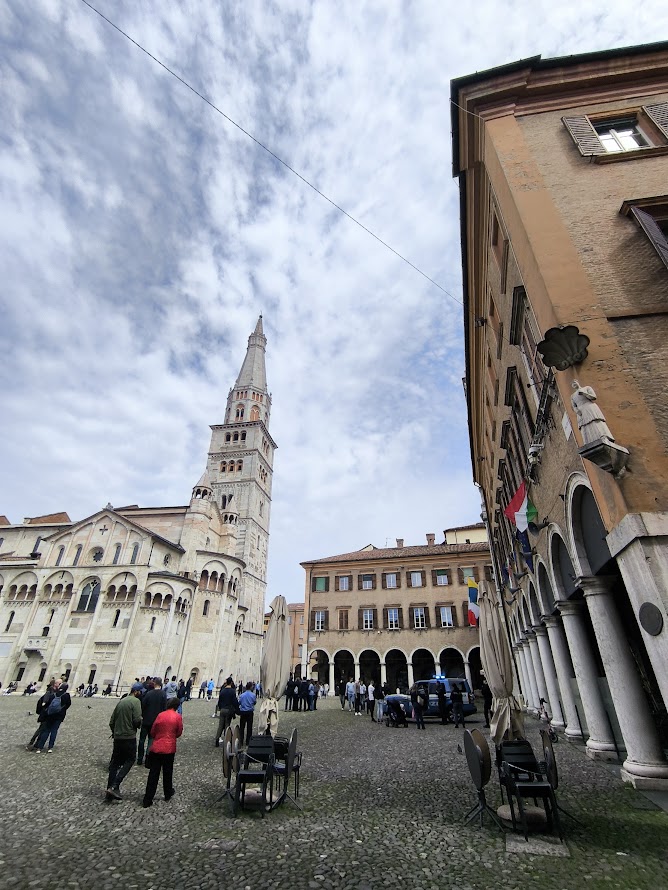
Rising 86 meters into the Modenese sky, the Ghirlandina Tower is more than just the cathedral’s bell tower — it is the pride of the city and a symbol of Modena’s historical independence and ambition. Originally conceived as a campanile for the Duomo, the tower was built in stages between the 12th and 14th centuries and gradually took on civic as well as religious importance.
The name “Ghirlandina” comes from the two garland-like marble balustrades that crown the spire. Elegant and airy, these garlands give the tower its distinctive silhouette, making it instantly recognizable across the skyline of Emilia-Romagna.
Inside the tower, visitors can explore a spiral staircase that leads up through a series of increasingly narrow and atmospheric chambers. Along the way, you’ll find historical rooms like the Sala della Secchia Rapita, decorated with frescoes and linked to a legendary episode in the rivalry between Modena and Bologna.
Climbing to the top is a rewarding experience: the panoramic views stretch across the rooftops of Modena, the surrounding plains, and even to the Apennine Mountains on clear days. From this vantage point, the harmony between the Duomo, Piazza Grande, and the medieval city becomes beautifully clear.
Today, the Ghirlandina is not only a popular tourist attraction but also a beloved symbol of local identity — proudly featured in Modena’s coat of arms and cherished by generations of citizens.
Discover more from Emilia Delizia
Subscribe to get the latest posts sent to your email.