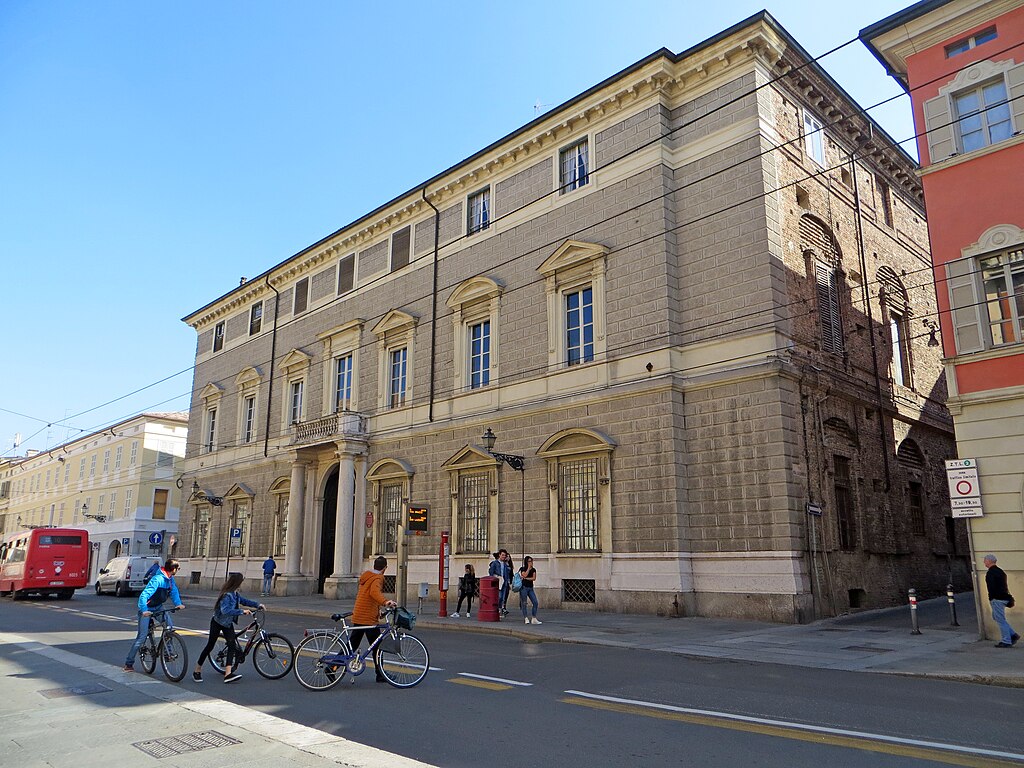
Palazzo Marchi, Parma – image source: Wikipedia
In the heart of Parma, Palazzo Marchi stands as a quiet but powerful reminder of the city’s cultural and artistic heritage. Built between 1770 and 1774 for Marquis Scipione Grillo, this elegant 18th-century palace is one of Parma’s finest examples of neoclassical architecture. Its refined façade, decorative stucco work, and carefully preserved interiors offer visitors a direct connection to the city’s aristocratic past.
More than an architectural landmark, Palazzo Marchi houses an important private art collection and reflects Parma’s long-standing role as a centre of learning, craftsmanship, and artistic patronage.
The History of Palazzo Marchi
The palace was designed by Giovanni Isidoro Furlani, a pupil of the renowned architect Ennemond Alexandre Petitot, whose influence shaped much of Parma’s urban elegance in the 18th century. Commissioned by Marquis Scipione Grillo, Duke of Monterotondo, Palazzo Marchi was conceived as a symbol of status, refinement, and intellectual ambition.
Over the centuries, the palace passed through several noble families before being acquired in 1859 by Antonio Marchi, an industrialist and patron of the arts. Since then, it has remained in the Marchi family, preserving both its architectural integrity and its cultural role within the city.
Today, Palazzo Marchi is part of the Castelli del Ducato circuit, which brings together historic residences and castles across the region and allows visitors to explore them through guided visits.
The Artistic Legacy
The palace’s museum itinerary traces Parma’s artistic development through paintings, sculptures, furnishings, and decorative arts collected by the Marchi family over generations. Together, these works reflect the city’s deep connection to academic culture and the traditions of the Academy of Fine Arts of Parma.
Looking for an authentic food experience?
Join our Foodie's Delight Tour – Parmigiano Reggiano, balsamic vinegar & cured meats in one unforgettable day.
One of the most significant recent additions is San Rocco nel Paesaggio by Parmigianino, acquired in 2023. Painted in the early 16th century, the work shows Saint Roch in a quiet, contemplative landscape. Its refined lines and elongated forms make it a striking example of Mannerist painting and a highlight for visitors interested in Renaissance art.
The presence of this masterpiece adds depth to the palace’s narrative, creating a dialogue between Renaissance art and the Enlightenment ideals that shaped 18th-century Parma. Temporary exhibitions of contemporary art further extend this conversation, keeping the palace very much alive rather than frozen in time.
Visiting Palazzo Marchi
Guided tours of Palazzo Marchi allow visitors to explore its richly decorated rooms, including the piano nobile, where original stucco work still adorns ceilings and walls. Tours are generally available on weekends from spring to early summer and again in autumn, with special visits possible by appointment.
Located along Strada della Repubblica, the palace sits at the heart of Parma’s historic centre, making it an easy and rewarding stop while exploring the city on foot.
Discovering Parma Beyond the Palace
A visit to Palazzo Marchi pairs naturally with a wider walk through Parma’s historic core. Just nearby, you’ll find:
- Piazza Garibaldi, the lively heart of the city, built over the site of the Roman forum.
- Parma Cathedral, a Romanesque masterpiece famous for Correggio’s frescoed dome.
- The Baptistery, clad in pink Verona marble and decorated with medieval sculptures and frescoes.
- Parco Ducale, a peaceful green space ideal for a break between visits.
- Strada Farini, a central street known for shops, cafés, and local food spots.
Many travellers choose to combine Parma’s artistic heritage with its culinary traditions. Exploring the city through food — whether independently or through experiences such as a guided introduction to Parma’s local cuisine — offers another perspective on the culture that shaped places like Palazzo Marchi.
Conclusion
Palazzo Marchi offers an intimate look into Parma’s aristocratic and artistic past, where architecture, fine art, and history come together naturally. Whether you are drawn by neoclassical design, Renaissance painting, or the quieter corners of the city’s historic centre, a visit here adds depth and context to any stay in Parma.
Discover more from Emilia Delizia
Subscribe to get the latest posts sent to your email.