The Two Towers of Bologna: History, Legends, and Why They Define the City
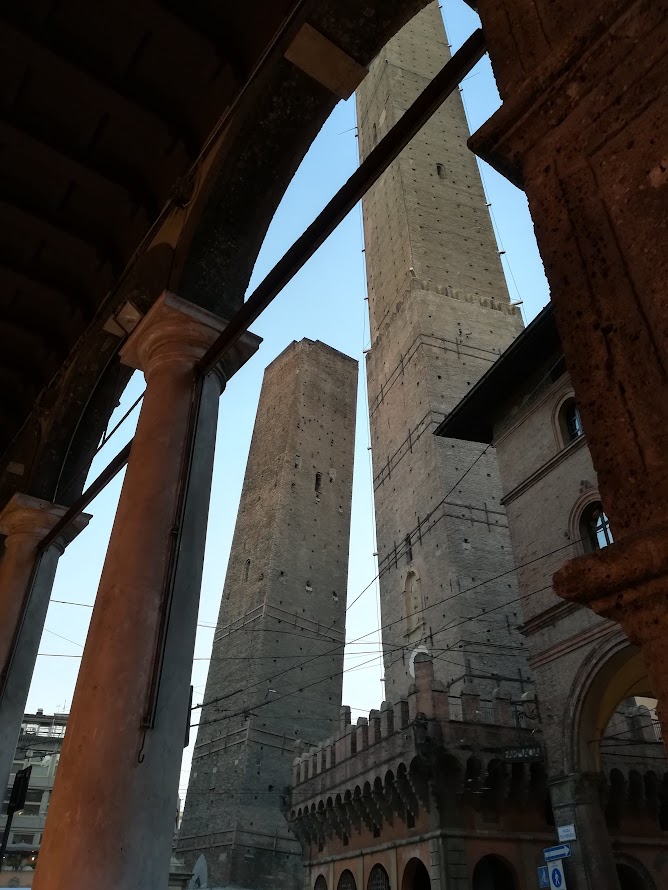
The cityscape of Bologna, an enchanting city in north-central Italy, is defined by elegant porticoes, medieval streets, warm terracotta colors, and a skyline shaped by ancient towers. Among all its architectural treasures, two structures rise above the rest and symbolize the very soul of the city: the Two Towers of Bologna — Torre Asinelli and Torre Garisenda.
Visible from almost anywhere in the historic center, the towers have become a powerful visual identity for Bologna, much like the Eiffel Tower for Paris or Big Ben for London. For travelers, they offer not only breathtaking views but also a tangible connection to the city’s medieval past, its cultural heritage, and its evolving urban life.
Whether you are planning your first visit or returning to explore deeper layers of the city, understanding the story of the Two Towers helps frame the entire Bologna experience.
Historical Significance of the Two Towers
Known locally as Le Due Torri, the towers date back to the early medieval period, when Bologna reportedly had over 100 similar towers scattered throughout the city. Wealthy families constructed them as symbols of power, prestige, and political influence, as well as for defensive purposes.
The Asinelli and Garisenda towers were built between 1109 and 1119 and named after the families who commissioned them. Over the centuries, most of Bologna’s towers disappeared, leaving these two as the most iconic survivors.
Torre Asinelli stands at approximately 97.2 meters, making it the tallest leaning medieval tower in the world. Despite a slight tilt, it remains structurally stable and has dominated the skyline for over nine centuries.
Torre Garisenda, originally around 60 meters tall, was shortened to about 48 meters in the 14th century due to soil subsidence and structural instability — a dramatic feature later immortalized by Dante in the Divine Comedy.
Together, the towers reflect the ambition, engineering skill, and competitive spirit of medieval Bologna.
Cultural and Literary References
The Two Towers are deeply embedded in Italian culture and literature. Dante Alighieri famously referenced Garisenda in the Inferno, using its dramatic lean as a metaphor for instability. Giovanni Boccaccio also mentioned the towers in the Decameron, cementing their place in literary history.
More recently, the towers have appeared in modern media, including the videogame Assassin’s Creed, bringing Bologna’s medieval architecture to a global audience. Their presence bridges centuries of storytelling, from medieval poetry to contemporary digital culture.
Looking for an authentic food experience?
Join our Foodie's Delight Tour – Parmigiano Reggiano, balsamic vinegar & cured meats in one unforgettable day.
For locals, the towers are not simply monuments — they are part of daily life, visible landmarks used for orientation, meeting points, and civic identity.
Scientific and Practical Uses Through the Centuries
Beyond symbolism, Torre Asinelli has served many practical roles throughout history. In different periods it functioned as a watchtower and defensive lookout, a prison during the 19th century, and a platform for scientific experimentation.
In 1640, Italian astronomer Giovanni Battista Riccioli used the tower for astronomical observations and gravity experiments. Its exceptional height also allowed scientists to study lightning behavior and atmospheric phenomena long before modern instruments existed.
Today, the tower remains open to visitors willing to climb its 498 wooden steps. The ascent rewards travelers with sweeping panoramic views across Bologna’s red rooftops, church domes, hidden courtyards, and distant Apennine hills.
Why the Two Towers Matter for Visitors Today
The Two Towers are more than just historical landmarks — they act as a gateway into understanding Bologna’s urban fabric, walkability, and cultural rhythm. They sit at the intersection of major streets, surrounded by cafés, markets, university life, and medieval porticoes.
They also carry significant economic implications as they’re integral to Bologna’s tourism, attracting millions of visitors each year and supporting the city’s hospitality, cultural institutions, and local businesses.
If you are organizing your visit and want to understand how the towers fit into a wider itinerary — including transport, neighborhoods, attractions, and seasonal tips — you may find this practical guide useful: How to Plan Your Trip to Bologna.
A Timeless Symbol of Bologna
The Two Towers of Bologna remain enduring symbols of resilience, ambition, and architectural brilliance. They quietly narrate stories of medieval rivalry, artistic genius, scientific curiosity, and urban evolution.
From afar they dominate the skyline; up close they reveal the texture of stone worn by centuries of wind, rain, and human footsteps. They remind visitors that Bologna is not merely a beautiful city — it is a living archive of European history.
More than monuments, the towers are living legends painted against Bologna’s changing sky, continuing to inspire travelers, scholars, artists, and curious minds alike.
Discover more from Emilia Delizia
Subscribe to get the latest posts sent to your email.