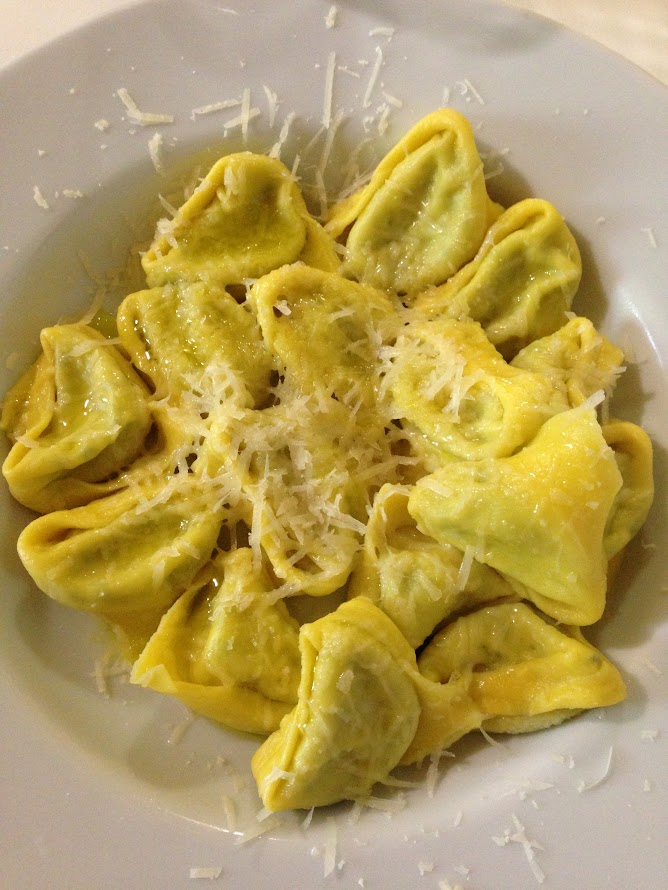
Tortelloni is one of Bologna’s oldest fresh pasta formats — a large, hand-folded parcel with a ricotta-based filling, typically served with melted butter and sage or a light cream sauce. It is often confused with tortellini, which it resembles in shape but differs from significantly in size, filling, and the way it is served. Understanding the difference is useful if you are eating your way through Bologna and want to order correctly.
Tortelloni vs Tortellini: What Is the Difference?
The names are similar enough to cause confusion, but the two pastas are distinct. Tortellini are small — roughly the size of a thumbnail — filled with a mixture of pork, mortadella, and Parmigiano Reggiano, and traditionally served in capon or beef broth. The meat filling and the broth are inseparable from what tortellini are.
Tortelloni are larger — typically four or five times the size of a tortellino — and filled with ricotta and parsley, sometimes with the addition of Parmigiano Reggiano and a pinch of nutmeg. There is no meat in the traditional filling. Because the pasta is larger and the filling more delicate, tortelloni are served with sauces rather than broth: classically, brown butter and sage, or a simple cream sauce that does not overpower the filling. Some trattorias serve them with a light tomato sauce, though this is less traditional.
In short: tortellini are small, meat-filled, served in broth. Tortelloni are large, cheese-filled, served with sauce. Ordering one when you wanted the other is a common tourist mistake — both are worth eating, but they are different dishes.
The Filling
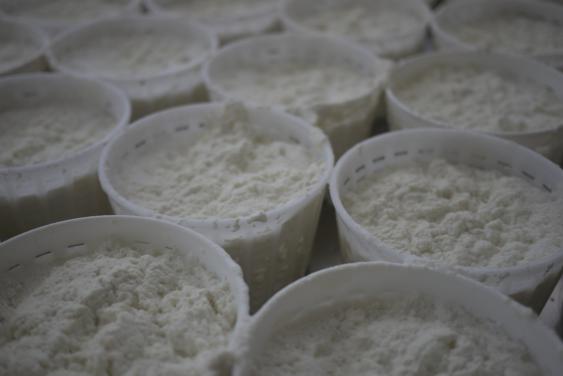
The classic Bolognese tortelloni filling is ricotta, fresh parsley, Parmigiano Reggiano, and nutmeg. The ricotta should be fresh and well-drained — excess moisture makes the filling wet and causes the pasta to split during cooking. The parsley adds freshness without dominating. The Parmigiano adds depth and a slight granularity. Nutmeg, used sparingly, lifts everything.
Some variations exist: spinach and ricotta is a common regional alternative; Swiss chard sometimes replaces parsley. In the countryside around Bologna, tortelloni fillings change slightly depending on the season and what is available — a reminder that fresh pasta in Emilia-Romagna has always been a response to local ingredients rather than a fixed formula.
How Tortelloni Are Made
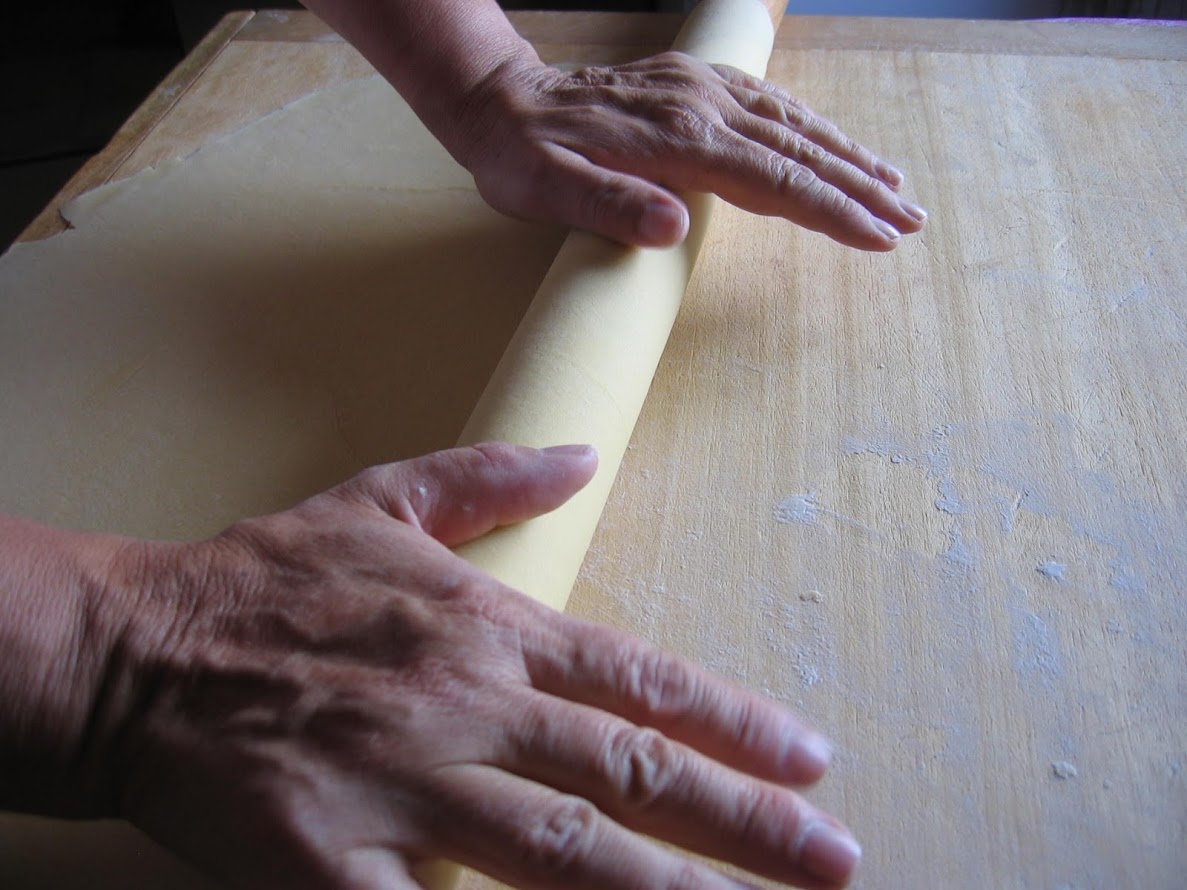
Tortelloni are made from fresh egg pasta dough — flour and eggs, nothing else — rolled thin by hand on a wooden board. The dough is cut into squares, a small amount of filling is placed in the centre of each, and the square is folded into a triangle, then the two outer corners are brought together and pressed to form the characteristic ring shape. The process is the same as making tortellini; only the square is larger.
The craft belongs to the sfoglina tradition — women who have rolled pasta since childhood, capable of producing sheets thin enough to read through. In Bologna, a good sfoglina is still considered a specialist, and the best trattorias make their pasta in-house daily. If you want to learn the technique yourself, our pasta-making class in Bologna covers fresh egg pasta, tortellini folding, and tagliatelle cutting with a local teacher.
Where to Eat Tortelloni in Bologna
Tortelloni appear on the menus of most traditional trattorias and osterias in Bologna. The places below are consistently recommended and make their pasta in-house. Menus change seasonally, so the filling and sauce may vary from what is listed here — that is a good sign, not a bad one.
All’Osteria Bottega
One of the most respected traditional kitchens in Bologna, listed in the Michelin guide. Tortelloni here tend to be seasonal — pumpkin in autumn, ricotta and herbs in spring and summer. The cooking is traditional Emilian without concessions to tourism. Booking is essential.
Looking for an authentic food experience?
Join our
Foodie’s Delight Tour – Parmigiano Reggiano, balsamic vinegar & cured meats in one unforgettable day.
Sfoglia Rina
Originally a pasta workshop, now a busy restaurant where you can watch sfogline hand-roll and fill pasta at the counter. Tortelloni are typically filled with ricotta and spinach or ricotta and pumpkin depending on the season, served with butter and sage. Popular with locals and gets crowded quickly — arrive early or expect to wait.
Trattoria del Rosso
A reliable and affordable trattoria that has been serving traditional Bolognese dishes for decades. Tortelloni with butter and sage are made without shortcuts and priced well below comparable places in the centre. Good for a straightforward, unpretentious meal.
Oltre — Via Augusto Majani, 1/b
A more contemporary setting that takes traditional pasta seriously. Known for balanzoni — the spinach-and-ricotta variant of tortelloni that is specific to Bologna — served with precision and good technique. A good option if you want something slightly more refined without straying into fine dining territory.
If you want to try tortelloni alongside other Bolognese pasta dishes — tagliatelle al ragù, tortellini in brodo, lasagne al forno — a guided food walk through Bologna’s centre is the most efficient way to cover the ground. Our Bologna food tour page covers the options available depending on how much time you have.
Frequently Asked Questions
What is the difference between tortelloni and tortellini?
Size, filling, and how they are served. Tortellini are small, filled with pork, mortadella, and Parmigiano Reggiano, and served in broth. Tortelloni are larger, filled with ricotta and parsley, and served with sauce — typically melted butter and sage or a light cream sauce. They share the same folded ring shape but are otherwise different dishes.
What is the traditional filling for tortelloni?
Ricotta, fresh parsley, Parmigiano Reggiano, and a pinch of nutmeg. The ricotta should be well-drained fresh ricotta — not the supermarket variety. Spinach and ricotta is a common variation; Swiss chard sometimes replaces the parsley. There is no meat in the traditional Bolognese tortelloni filling.
What sauce is served with tortelloni?
The classic pairing is melted butter and sage — the butter is cooked until it begins to brown, the sage leaves are added briefly, and the tortelloni are tossed in the pan. A light cream sauce is also common. Tortelloni are not traditionally served with ragù (that is tagliatelle) or in broth (that is tortellini).
Can I learn to make tortelloni in Bologna?
Yes — the folding technique is the same as for tortellini, and most pasta classes in Bologna cover both. Our pasta-making class includes fresh egg pasta dough, hand-rolling, and folding, with a meal at the end using what you have made.
Is tortelloni vegetarian?
Yes — the traditional ricotta and parsley filling contains no meat. This makes tortelloni one of the few traditional Bolognese pasta dishes that is naturally vegetarian. Check with the restaurant that the pasta dough itself is egg-based (it always is in Bologna) and that no meat stock has been used in the sauce.
Discover more from Emilia Delizia
Subscribe to get the latest posts sent to your email.