Bologna has a serious gelato culture. This should not be surprising in a city that applies the same standards to every food it produces — quality ingredients, traditional methods, no shortcuts — but it is worth saying plainly for visitors who might assume that gelato is gelato wherever you find it. It is not. The gap between a tub of industrially produced ice cream dyed to look like pistachio and a properly made artisan gelato from Bolognese pistachios is as wide as the gap between supermarket mortadella and the real thing from the Quadrilatero. Bologna has both kinds of gelato shop. This guide covers only the ones worth visiting.
Gelato vs. Ice Cream: What the Difference Actually Is
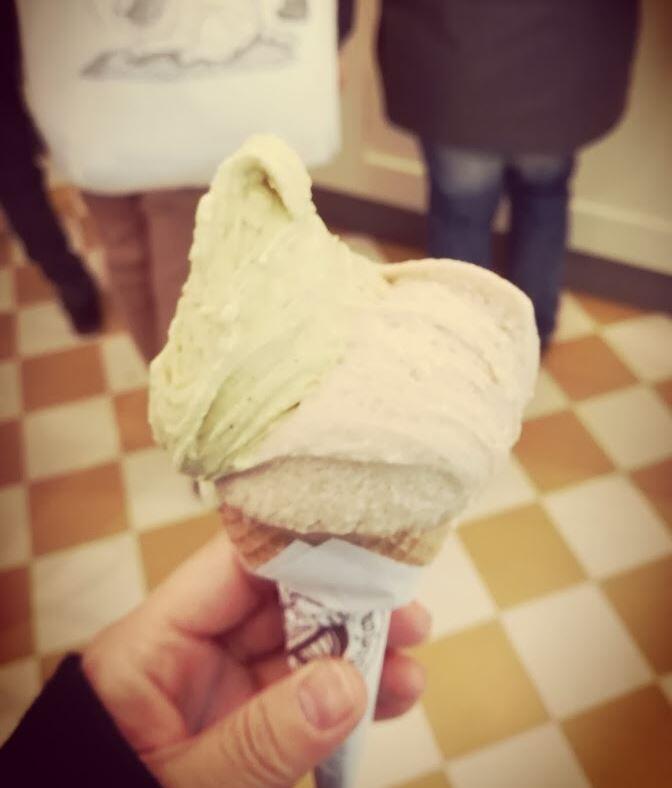
The distinction matters because gelato artigianale is a genuinely different product. Industrial ice cream is churned at high speed, incorporating large amounts of air (up to 100% overrun) and typically contains more fat from cream. Artisan gelato is churned slowly, has much lower overrun (20–35%), uses more milk than cream, and is served at a slightly warmer temperature — around −11°C rather than the −18°C of hard-scoop ice cream. The result is denser, softer, and more intensely flavoured. A properly made pistachio gelato tastes of pistachio in a way that most ice cream does not, because the flavour is not diluted by excess fat and air.
How to identify artisan gelato in a Bologna shop: the product should be stored in covered metal pans (pozzetti), not piled high in open tubs with artificial colours. Natural pistachio gelato is pale green-grey, not bright green. Nocciola (hazelnut) is brown, not orange. If the colours are vivid, the ingredients are probably artificial. The texture should hold its shape on the cone for a reasonable time without immediately melting into liquid.
The Best Gelaterie in Bologna
Gelateria Gianni
Gelateria Gianni has been operating a stone’s throw from Piazza Maggiore since 1980. The founder Gianni Figliuolo built the gelateria on traditional recipes with a selective eye for regional ingredients — Nocciola del Piemonte from Piedmont hazelnuts, citrus from Sicilian orchards, Fior di Latte made with proper whole milk. The signature Bacio di Gianni — milk chocolate, hazelnut, and crunchy puffed rice — is the flavour most associated with the house. The location, a few steps from the Basilica di San Petronio, makes it a natural stop during any walk through the historic centre.
La Sorbetteria Castiglione
La Sorbetteria Castiglione, established in 1985 in the Castiglione neighbourhood south of the centre, is one of the most respected gelaterie in the city. The philosophy balances strict fidelity to traditional flavours with seasonal innovation: classics like Stracciatella and Pistacchio are made to an exacting standard, while seasonal specials push further — Ricotta e Fichi (ricotta and fig), Zucca e Amaretti (pumpkin and amaretti biscuit), Gorgonzola e Pere (gorgonzola and pear). The terrace draws locals year-round. If you only have time for one gelateria in Bologna that is not in the immediate tourist centre, this is the one.
Looking for an authentic food experience?
Join our
Foodie’s Delight Tour – Parmigiano Reggiano, balsamic vinegar & cured meats in one unforgettable day.
Gelateria delle Moline
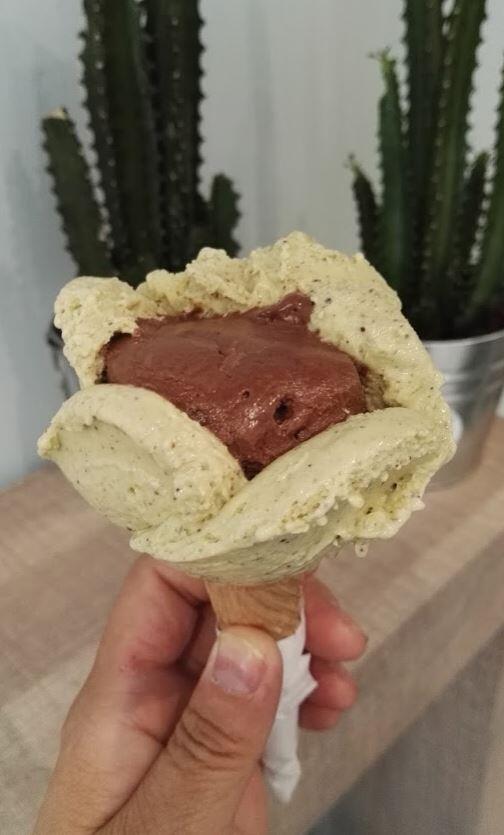
Gelateria delle Moline on Via delle Moline — “mill street”, a reference to Bologna’s medieval canal and milling history — is one of the city’s most consistently excellent artisan gelaterie. The range runs from classical Stracciatella and Fiordilatte through to inventive seasonal combinations: Pear and Cinnamon, Sacher Torte, Mojito. Vegan and allergy-friendly options are well covered. The location in the university quarter gives it a loyal local customer base that keeps the quality honest — students who live nearby are less forgiving than tourists passing through once.
Cremeria Funivia
Cremeria Funivia opened in 2011 in Piazza Cavour, one of Bologna’s most beautiful historic squares. The name references Bologna’s old funicular railway, and the gelateria has established itself quickly among the city’s best. The flavour range leans adventurous — Black Sesame, Cremino al Sale Marino, Ricotta with Figs and Walnuts sit alongside traditional Pistachio and Hazelnut — but the classical base is solid. The setting in Piazza Cavour, close to the Due Torri, makes this a natural stop on the eastern side of the historic centre.
Stefino Bio
Stefino Bio is Bologna’s most serious organic and vegan gelateria, founded by Stefano Marcotulli as a deliberate challenge to the conventional gelato model. Every ingredient is sourced organically — Sicilian almonds, Piedmont hazelnuts, fair-trade chocolate — and the gelato is entirely free from animal products, artificial additives, and artificial flavours. The flavour range includes unusual options like turmeric and cardamom alongside more conventional choices. For visitors who eat vegan or who want to understand what gelato tastes like when made with the highest possible ingredient standards, Stefino Bio is the clearest demonstration in the city.
Il Gelatauro
Il Gelatauro is the gelateria in Bologna most associated with the meeting of traditional Italian technique and international ingredients. Sicilian pistachios, Sorrento lemons, Japanese matcha, and Wasabi sit alongside classic Gianduja and Zabaione — a local dessert wine flavour that is genuinely Bolognese. The most talked-about flavour is the mortadella gelato: a creation that uses Bologna’s most famous product in a sweet context and divides opinion sharply. It is worth trying at least once. The approach throughout is strictly artisanal — fresh natural ingredients, no preservatives, no artificial flavours — and the quality is consistent.
When and How to Eat Gelato in Bologna
Gelato in Bologna is a year-round activity, not a summer-only one. The artisan gelaterie listed here are open through winter, and a properly made gelato on a cold afternoon in February is no less enjoyable than one in August. Spring and autumn are arguably the best seasons — the queues are shorter, the seasonal flavours are at their most interesting, and the city is less crowded.
- Cone or cup: Both are correct. The cone (cono) adds a textural contrast; the cup (coppetta) lets you focus on the gelato itself. Avoid wafer cones that taste of nothing — a good gelateria uses proper cones.
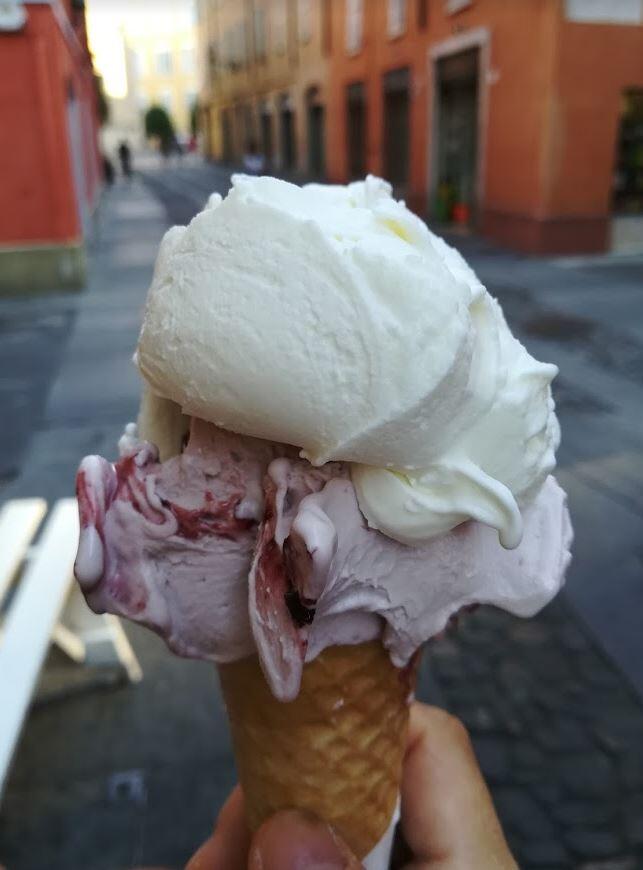
- How many flavours: Two is standard on a single scoop. Three is possible but risks muddying the individual flavours. Choose contrasts — a cream-based gelato and a fruit sorbet, or a nut flavour and a chocolate.
- What to benchmark: Order Pistachio and Nocciola (hazelnut) at any new gelateria. These are the flavours most easily faked with industrial pastes and most clearly distinguished when made properly from real nuts. If both are excellent, the rest of the menu will be too.
- Gelato and the food markets: The Quadrilatero and the Mercato delle Erbe are close to several of the gelaterie listed here. A morning market visit followed by a gelato at midday is one of the more satisfying sequences available in Bologna.
Discover more from Emilia Delizia
Subscribe to get the latest posts sent to your email.