Emilia-Romagna, when viewed on a map, is framed almost linearly between the River Po and the Apennines, with its watershed gently diverging toward the Adriatic coast. Running longitudinally through the region is the historic Via Emilia — the ancient Roman road that traditionally separates the plains from the mountains.
Roughly at the height of Imola lies the historical border that once divided Emilia, under Roman control, from the territories influenced by barbarian dominations — in this case, Romagna. These geographical and historical divisions are deeply reflected in the region’s cuisine. It is remarkable how such a relatively small area contains so many culinary identities.
Emilia-Romagna combines northern European influences — particularly in Emilia, where gastronomy traditionally centres on pig farming and animal fats — with Mediterranean traditions such as sheep farming and olive oil production. In Romagna, bread often gives way to the iconic piadina, a flatbread cooked on a cast-iron skillet, commonly filled with ham, salami, or soft cheeses. Its origins may even trace back to Byzantine times.
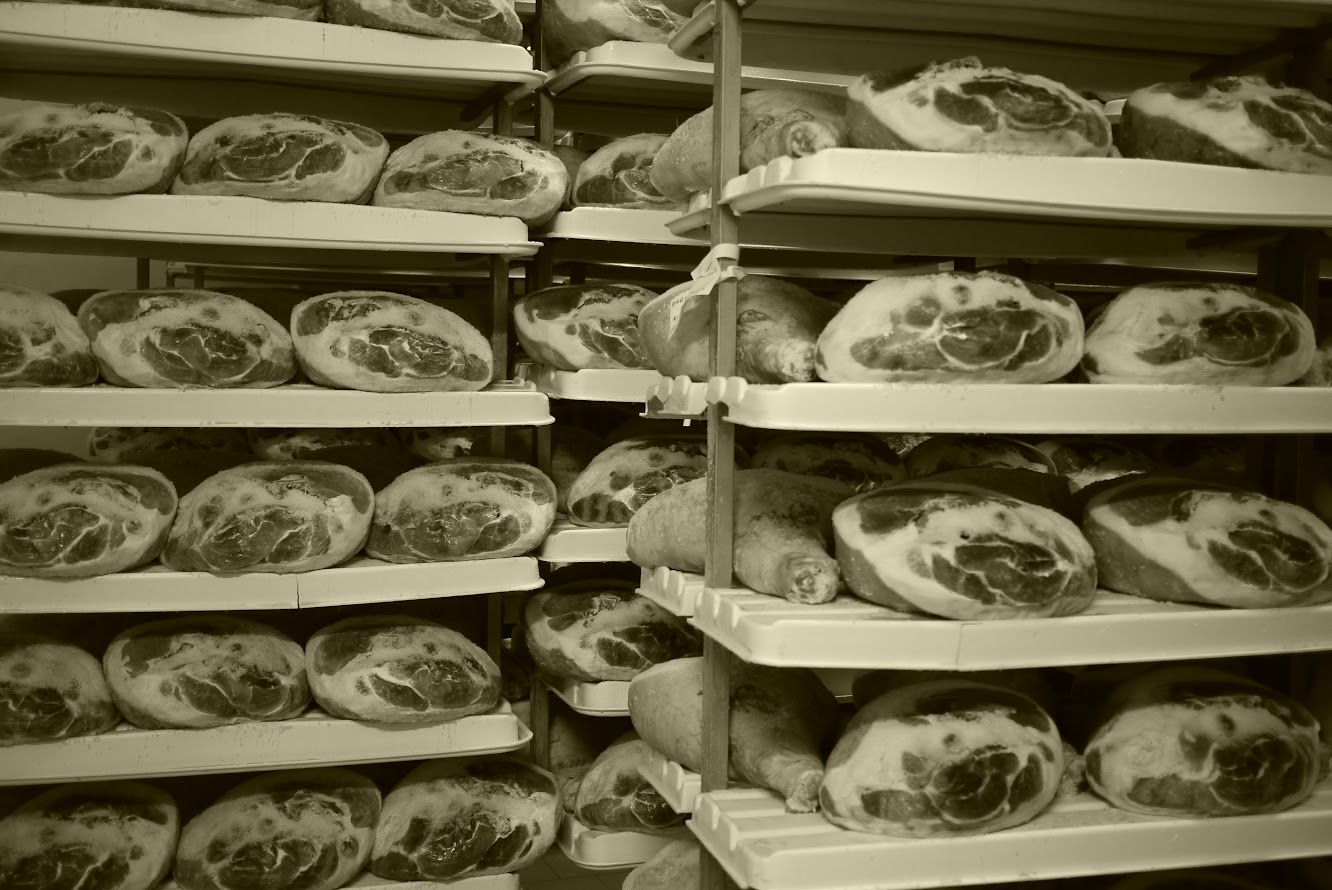
Emilia boasts an astonishing variety of salumi, while Romagna is known for its distinctive pecorino, aged in underground pits to develop a unique flavour. Emilian cuisine is rich and persuasive; Romagnolo flavours are more vigorous and earthy. Over centuries, these differences have blended and evolved, shaping the modern geography of food across the region.
Travelling along the Via Emilia is like moving through a living gastronomic atlas.
The journey begins in Piacenza, known for its Apennine salamis — coppa, pancetta, and salami — alongside fine wines such as red and sparkling Gutturnio. The cuisine here shows influences from nearby Lombardy, Piedmont, and Liguria.
Then comes Parma, a land of extraordinary gastronomic heritage: Parmigiano Reggiano, Prosciutto di Parma, and the prized Culatello di Zibello, often paired with aromatic Malvasia wines. It is culinary art that has conquered the world. For a full practical guide to visiting, see how to plan your trip to Parma.
Next is Reggio Emilia, the cradle of Parmigiano Reggiano and the beginning of the Lambrusco production area — a sparkling red wine beloved by many Italians. For a full introduction to the grape and how to drink it well, read our guide to drinking Lambrusco in Modena and Parma, or the broader overview of the wines of Emilia-Romagna.
In Modena, salami and zampone take centre stage. The surrounding hills produce Lambrusco Grasparossa and the famous cherries of Vignola. Modena also holds a unique place in global gastronomy as home to some of Italy’s most celebrated restaurants and producers. See how to plan your trip to Modena for a practical guide, or what to do in Modena for food lovers for a curated itinerary built around eating and producers.
The sharp edge of Emilian cuisine is found in Bologna, where pasta reigns supreme: tagliatelle, tortellini, and lasagne, served with rich meat sauces prepared with dignity and tradition. Bologna is the most visited city in the region and offers the widest range of food experiences. Read how to plan your trip to Bologna for a practical overview, the Bologna food guide for what to eat and where, and our deep dive into traditional pasta dishes of Bologna for the full picture of the city’s pasta culture.
North of Bologna lies Ferrara, famous for its sumptuous salama da sugo and the wines of Bosco Eliceo, cultivated on the sandy soils of the Po Delta.
Beyond Castel San Pietro, Romagna begins, blending Apennine and Adriatic influences. Ravenna offers the olive oil of Brisighella and the first vineyards of fine Albana wine. In Forlì and Cesena, mountain traditions dominate, with meat and game reminiscent of Tuscan cuisine. Finally, Rimini brings tomato-based fish soups with bold vinegar and pepper notes, opening the culinary path toward Central Italy and the valleys of Montefeltro in Le Marche.
Emilia-Romagna features thirteen officially designated gourmet routes for travellers, carefully structured and fully operational. The Enoteca Regionale di Dozza (BO) serves as a key reference point for regional food and wine experiences, hosting a calendar full of events, from village festivals to street food fairs.
Planning Your Visit to Emilia-Romagna
If you are trying to decide which city to base yourself in, Modena vs Bologna vs Parma breaks down the differences in character, food culture, and visitor experience to help you choose. For a broader itinerary that connects all three, day trips from Bologna, Parma or Modena maps out the best routes between the cities and the surrounding countryside.
Food-focused travellers will find the most concentrated experiences in Emilia. The best food day trip from Bologna covers Parmigiano Reggiano, balsamic vinegar, and prosciutto in a single day. For a broader introduction to the region’s protected designations, experience authentic DOP producers in Emilia-Romagna is the essential guide to visiting the producers who hold these traditions.
Beyond food, Emilia-Romagna is also home to the Motor Valley — the birthplace of Ferrari, Lamborghini, Maserati, and Ducati. Discover the thrills of Motor Valley in Emilia-Romagna is the starting point for travellers who want to combine gastronomy with automotive history.
For visitors wishing to explore this culinary heritage firsthand, experiencing production at the source is essential. If you are staying in Bologna, you can join a Parmigiano Reggiano dairy tour from Bologna and witness the traditional craftsmanship that has defined the region for centuries.
Discover more from Emilia Delizia
Subscribe to get the latest posts sent to your email.