Modena sits at the centre of the most food-dense territory in Italy. Within thirty kilometres of the city you will find the acetaie where traditional balsamic vinegar ages for decades, the dairies where Parmigiano Reggiano wheels are turned and inspected every day, and the curing rooms where culatello and Prosciutto di Parma hang in the fog of the Po Valley. The city itself is a UNESCO World Heritage Site for its Romanesque cathedral. It produced Enzo Ferrari and Luciano Pavarotti. It is home to Osteria Francescana, three times voted the best restaurant in the world. For its size — around 185,000 people — Modena punches at a weight that no other Italian city of comparable scale can match.
This guide covers everything a visitor needs: what to eat, where to eat it, what to see, how to get there, and how to organise a day or two that does justice to what the city actually offers.
What Modena Is Actually Famous For
Visitors who arrive in Modena knowing only that it is “near Bologna” are usually surprised by how much is concentrated here. The short version: Modena is simultaneously the world capital of traditional balsamic vinegar, one of the primary production zones for Parmigiano Reggiano, the birthplace of Ferrari and Maserati, a city with a Romanesque cathedral on the UNESCO list, and the location of the restaurant that has held the number one position in the World’s 50 Best Restaurants on three separate occasions. These things are not a coincidence. They reflect a culture that applies the same standards of craft and obsession to everything it produces — whether that is a wheel of aged cheese, a sports car, or a plate of hand-rolled pasta.
Food: What to Eat in Modena
The Modenese table is distinct from the Bolognese one even though the two cities are 40 kilometres apart. The differences are subtle but real. Modena uses more balsamic vinegar in everyday cooking — not the syrupy commercial product, but the genuine article, used in small drops on meats, cheeses, and even strawberries. The local pasta shapes lean toward tortellini and tortelloni. And the city has a particular relationship with gnocco fritto — the fried dough pillows served warm with prosciutto and salumi — which functions here as both a street food and a sit-down trattoria staple.
Gnocco Fritto and Tigelle
Gnocco fritto — known in other parts of Emilia-Romagna as crescentina, torta fritta, or fried dough — is the Modenese breakfast and aperitivo food of choice. Light, blistered, and hollow inside, it is eaten warm, split open, and filled with a slice of prosciutto di Modena or mortadella. Where to eat the best gnocco fritto in Modena is a serious local conversation, and the answer changes depending on which neighbourhood you are in. Tigelle — small round flatbreads cooked on a griddle — are the other essential bread format, typically served with a selection of cured meats and soft cheeses.
Tortellini in Brodo
Modena and Bologna share tortellini, and both cities claim the dish. The Modenese version uses a slightly different filling ratio — more pork loin, less mortadella — and the broth is typically made from capon or a combination of beef and chicken. In Modena, tortellini in brodo is the defining festive dish: Christmas, New Year, and every significant family occasion. Order it as a first course, never as a main, and judge the restaurant by the clarity of the broth.
Balsamic Vinegar
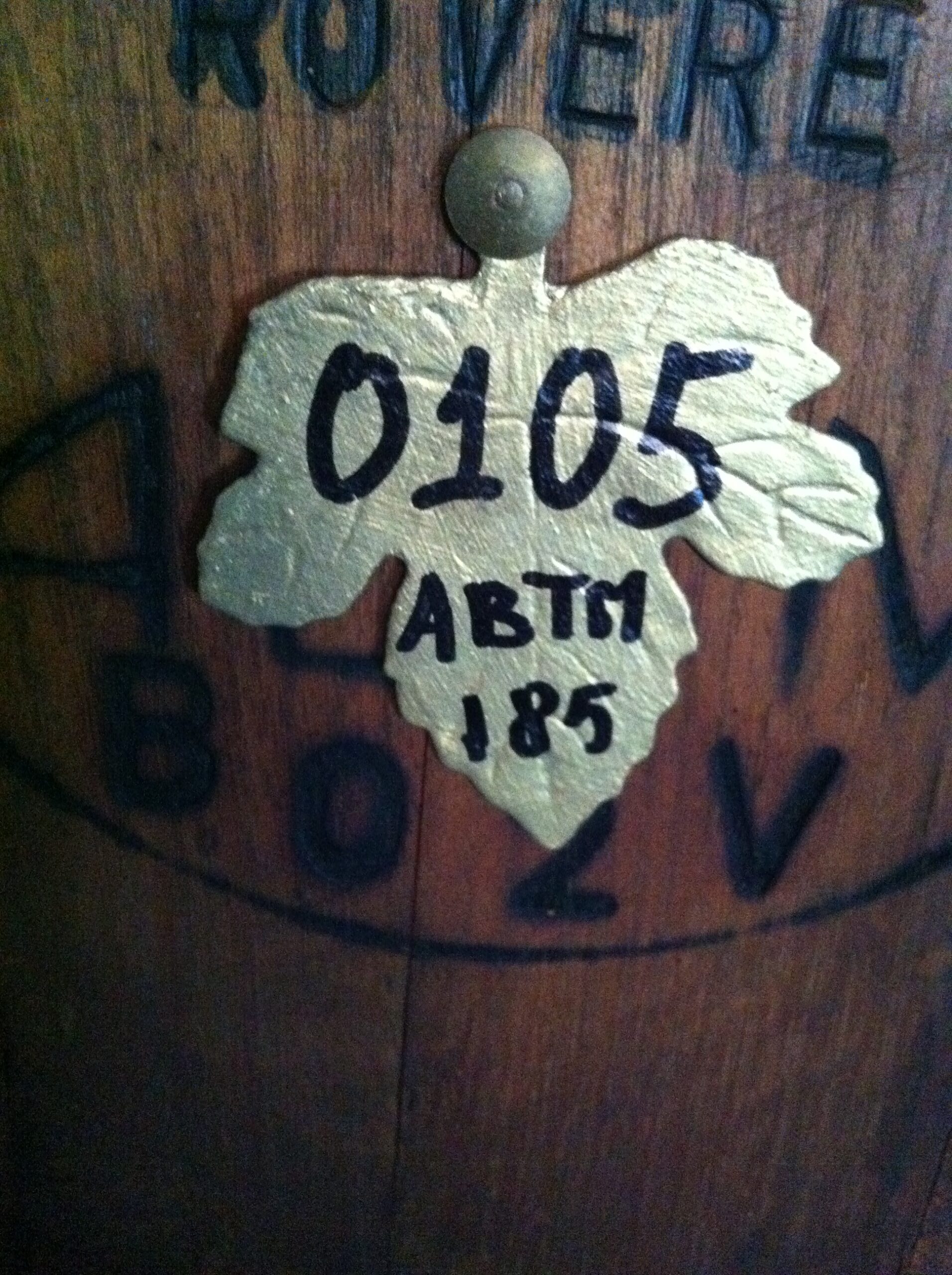
Traditional Balsamic Vinegar of Modena DOP is one of the most complex food products in the world: cooked grape must aged in a battery of progressively smaller barrels — typically mulberry, cherry, oak, juniper, and chestnut — over a minimum of 12 years (Affinato) or 25 years (Extravecchio). It bears no meaningful resemblance to the commercial balsamic vinegar sold in supermarkets. In Modena, it is used in drops, not splashes — on Parmigiano Reggiano, on grilled meats, on strawberries at the end of a meal. Understanding what it is and how it is made is one of the most rewarding things a food-curious visitor can do in the city. A full guide to the producers you can visit is in our comprehensive list of balsamic vinegar factories in Modena.
Lambrusco
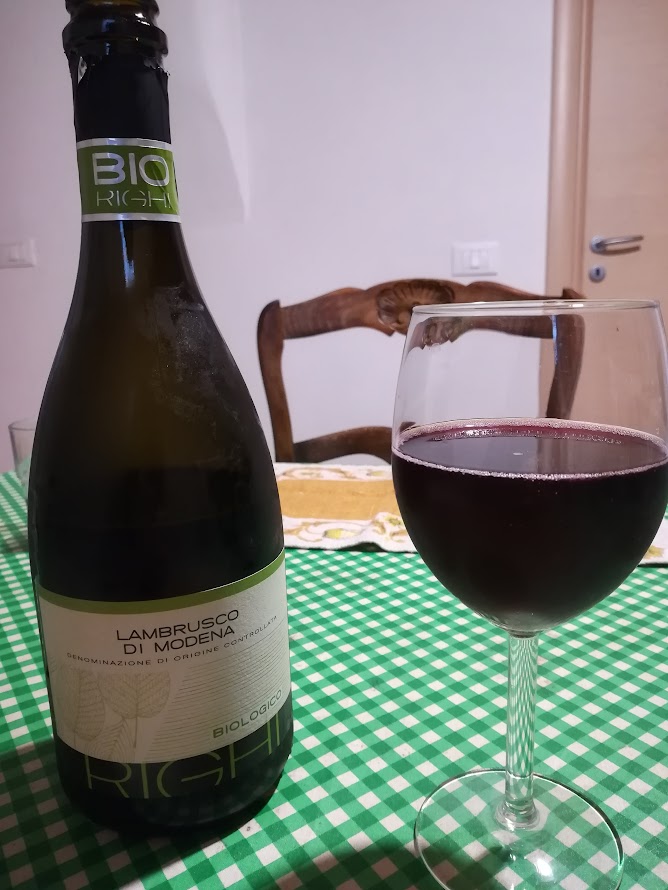
Lambrusco is the wine of Modena, and the version you will drink here is nothing like the sweet, fizzy export product that gave the name a bad reputation in the 1970s and 1980s. Dry Lambrusco di Sorbara — the most prized local variety — is light-bodied, slightly sparkling, and deeply food-friendly: it cuts through the fat of the local salumi and refreshes the palate between courses in a way that heavier wines cannot. It is served slightly chilled and drunk young. A complete guide to drinking Lambrusco in Modena covers the best producers and where to find them.
Where to Eat in Modena
Modena has a restaurant for every level of ambition and budget. At the top end, Osteria Francescana (Via Stella 22) needs no introduction — three Michelin stars, multiple World’s 50 Best number one rankings, Massimo Bottura’s lifelong project. Booking opens months in advance and fills within hours. For a more accessible version of the same creative tradition, Franceschetta 58 (also Bottura’s) on Via Vignolese offers bistro-level prices with the same sourcing philosophy.
For traditional Modenese cooking at trattoria prices, Trattoria Aldina on Via Albinelli is the most respected name among locals — a no-menu, fixed-price lunch that changes daily and sells out early. Osteria Francescana aside, L’Erba del Re (one Michelin star) offers the most precise contemporary take on Emilian ingredients at a more reachable price point than Francescana. For affordable eating in Modena, the area around the Mercato Albinelli has the highest concentration of good-value options.
What to See in Modena
The Duomo and Ghirlandina Tower
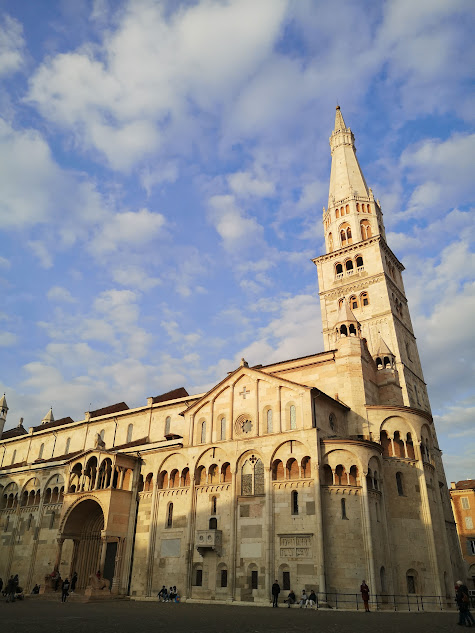
The Duomo di Modena is one of the finest examples of Romanesque architecture in Italy. Built from 1099, it was designated a UNESCO World Heritage Site in 1997 alongside the Ghirlandina Tower and Piazza Grande. The facade reliefs by the sculptor Wiligelmo are among the most important pieces of Romanesque sculpture in Europe. The Ghirlandina Tower — 87 metres, begun in the 12th century — is open for guided climbs and offers views across the Po Plain on clear days. Allow at least an hour for the cathedral and tower together; neither rewards a rushed visit.
Looking for an authentic food experience?
Join our
Foodie’s Delight Tour – Parmigiano Reggiano, balsamic vinegar & cured meats in one unforgettable day.
Mercato Albinelli
The covered food market on Via Albinelli is the best single place in Modena to understand what the city actually eats. Built in 1931 in a Liberty-style pavilion, it operates Monday to Saturday mornings and houses stalls selling fresh pasta, local salumi, seasonal vegetables, aged Parmigiano, and traditional balsamic vinegar at producer prices. Arrive before 11am for the full range; many stalls begin packing down by noon. The market is surrounded by bars and small restaurants that draw a largely local crowd at lunchtime.
Galleria Estense
The Galleria Estense in the Palazzo dei Musei holds one of the most important Renaissance art collections in northern Italy — assembled by the Este family, who ruled Modena as a duchy from the 13th to 18th centuries. The collection includes works by Velázquez, El Greco, Tintoretto, Correggio, and a portrait bust of Francesco I d’Este by Bernini. It is consistently undervisited relative to its quality. The same building houses the Biblioteca Estense, which holds the illuminated Bible of Borso d’Este — one of the finest manuscript illuminations in existence.
Motor Valley: Ferrari, Maserati and the Supercar Museums
The Motor Valley — the stretch of Emilia-Romagna between Modena and Bologna — is responsible for Ferrari, Maserati, Lamborghini, Ducati, and Pagani. All of them were founded within a 50-kilometre radius, and most of them are still based here. The story of why this happened — a combination of post-war mechanical culture, family craft traditions, and the particular character of the Emilian industrial landscape — is as interesting as the cars themselves.
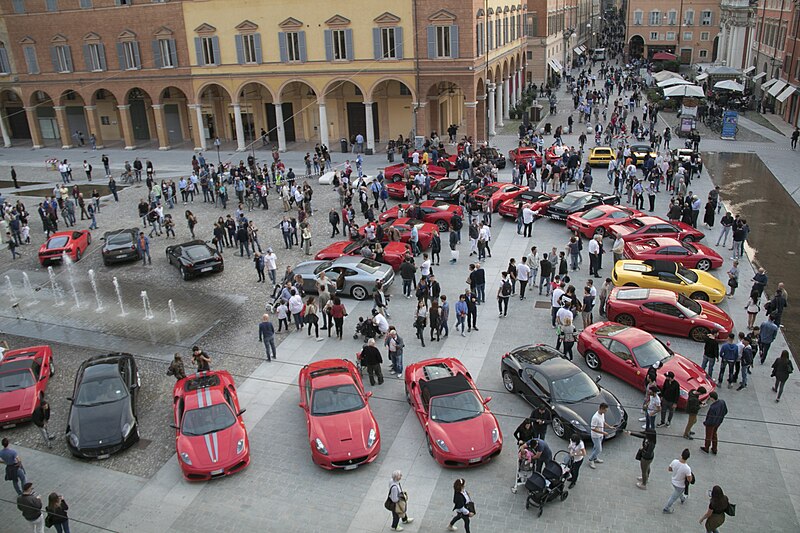
For visitors, the key destinations are:
- Museo Ferrari in Maranello — 18km south of Modena. The factory museum covers the full history of the marque, with a rotating exhibition of race cars and road cars. Factory tours are separate and require advance booking.
- Maserati — visiting Maserati in Modena requires advance arrangement; guided tours of the historic factory on Viale Ciro Menotti are available through specialist operators.
- Museo Stanguellini — a small, family-run museum in Modena dedicated to the Stanguellini racing cars of the 1950s and 1960s. Undervisited and charming.
- Lamborghini Museum in Sant’Agata Bolognese — 25km north of Modena. The recently renovated MUDETEC museum is the most impressive of the Motor Valley institutions in terms of presentation.
Day Trips and Producer Visits from Modena
Modena is the ideal base for visiting the food producers of Emilia-Romagna. The acetaie are mostly within 20 minutes of the city centre. Parmigiano Reggiano dairies are concentrated in the area between Modena and Reggio Emilia. The balsamic vinegar producers near Modena that welcome visitors range from family operations with a single battery of barrels to larger certified acetaie with tasting rooms and retail.
For a structured experience that combines multiple producers in a single day, the best day trip from Bologna for food lovers covers Parmigiano, balsamic, and Prosciutto di Parma in one itinerary. Alternatively, for visitors based in Modena specifically, a Modena food tour can be arranged to visit the market, the acetaia, and a Parmigiano dairy in a single morning.
Getting to Modena
Getting to Modena is straightforward from most Italian cities. The fastest connections are by train from Bologna (17–25 minutes on the regional line, trains every 30 minutes) and Milan (around 1 hour on the high-speed service). There is no commercial airport in Modena; the closest are Bologna Marconi (BLQ, 45 minutes by train and bus) and Milan Malpensa (MXP, around 2 hours). By car, Modena sits on the A1 motorway between Milan and Bologna, with two exits serving the city centre (Modena Nord and Modena Sud).
Once in the city, getting around Modena on foot is practical for the historic centre. The Duomo, Mercato Albinelli, Galleria Estense, and the main restaurant district are all within a 15-minute walk of each other. A bicycle is the preferred local transport for slightly longer distances; rental is available at the station.
How Long to Spend in Modena
A single afternoon is enough to see the Duomo, walk the historic centre, and eat one good meal. It is not enough to understand the city. Two full days allows you to add a producer visit, explore the Galleria Estense properly, and eat at more than one level of the restaurant spectrum. Three days, with a car, opens up the full Motor Valley circuit and the surrounding countryside. For most visitors arriving from Bologna or Milan, the realistic option is one overnight stay combined with a structured morning itinerary — either food-focused or motor-focused, rarely both in the same visit. What to do in Modena if you only have an afternoon covers the compressed version.
For those with more time, what to do in Modena for food lovers is a deeper guide to organising a visit around the city’s full culinary offer. And for practical accommodation advice, the best places to stay in Modena covers options across the range from central boutique hotels to agriturismi in the surrounding countryside.
Discover more from Emilia Delizia
Subscribe to get the latest posts sent to your email.