The Art of Curing Parma Ham: Inside the Skills of a Master Salter
Curing Prosciutto di Parma is not a simple task—it is a culinary art that requires precision, experience, and years of practice. Fabrizio, a master salter at La Perla Prosciuttificio in Langhirano, often tells visitors that it can take up to 10 years to truly master the craft. We learned this firsthand during one of our guided experiences in the Parma hills.
If you want to explore this tradition in person, visit our full tour page here:
Parma Ham Tour – Visit an Authentic Prosciutto Factory
Why Timing Matters in Prosciutto Production
According to the guidelines of the Consorzio del Prosciutto di Parma, the hind legs must reach the curing facility as quickly as possible after slaughter. This is crucial for two reasons:
Fresh meat contains natural bacteria—starting the curing process early prevents spoilage.
Faster processing allows the salter to use less salt, preserving Parma ham’s famously delicate, sweet aroma.
Unlike many cured meats, true Parma ham is never overly salty. Its flavour depends on minimal salt, lots of time, and absolute precision—a combination that leaves very little room for error.
How the Salting Process Begins
When the fresh legs arrive in Langhirano, the rind is first massaged and salted using mechanical rollers. But the most delicate work—the salting of the exposed meat—is done entirely by hand by the master salter.
Below are the three critical points where salt must be applied perfectly to avoid spoilage.
1. The Femoral Head – The Most Delicate Zone
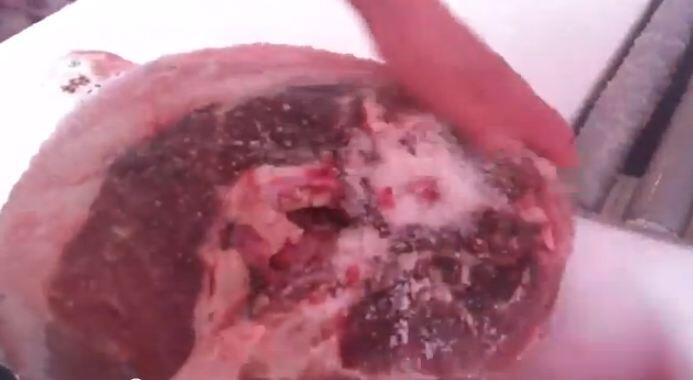
This is the first point where salt is applied. The femoral head is highly sensitive and particularly prone to spoilage. Too much salt compromises flavour; too little can ruin the entire leg. This is where the salter’s years of experience are essential.
2. The Femoral Artery – Precision Salt Placement
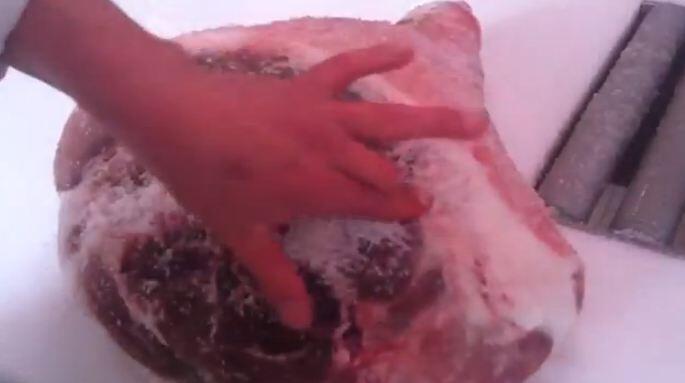
Next, the salter presses gently along the femoral artery, creating a pocket where salt can penetrate naturally. This technique ensures controlled absorption—another step where human skill outperforms machinery.
3. The Fat Line Between Meat and Rind
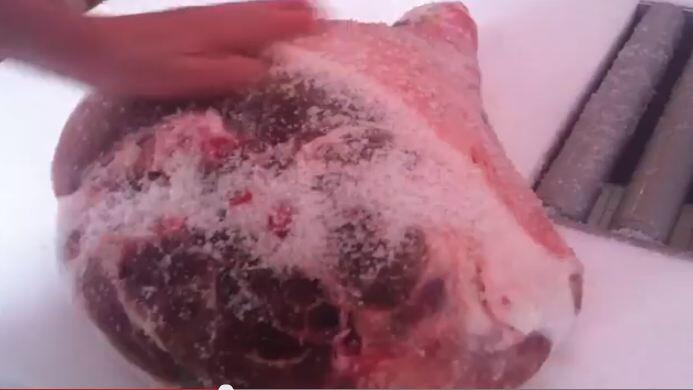
Finally, a handful of salt is gently massaged along the fatty line—the border between rind and meat. This step regulates moisture loss, helping the ham age evenly over 12 to 36 months.
Learn Parma Ham Curing Techniques With Us
Emilia Delizia organises in-depth Parma ham factory tours at small, artisan prosciuttifici throughout the Parma region. Our visits reveal the true craftsmanship behind Prosciutto di Parma—from salting to aging to tasting.
If you’re fascinated by these techniques, we offer tailored visits in your preferred language and level of detail.
Book or learn more here:
Parma Ham Tour – The Complete Prosciutto Experience
Discover more from Emilia Delizia
Subscribe to get the latest posts sent to your email.